Bird Spikes vs Netting: Which Bird Deterrent Is Best?
When pigeons keep landing on your ledge, aircon or parapet, two solutions come up first: bird spikes and bird netting. Both are humane, legal and widely used in Singapore, but they suit different situations. This guide compares bird spikes versus netting honestly, so you can choose the right deterrent for your HDB flat or condo.
How bird spikes work
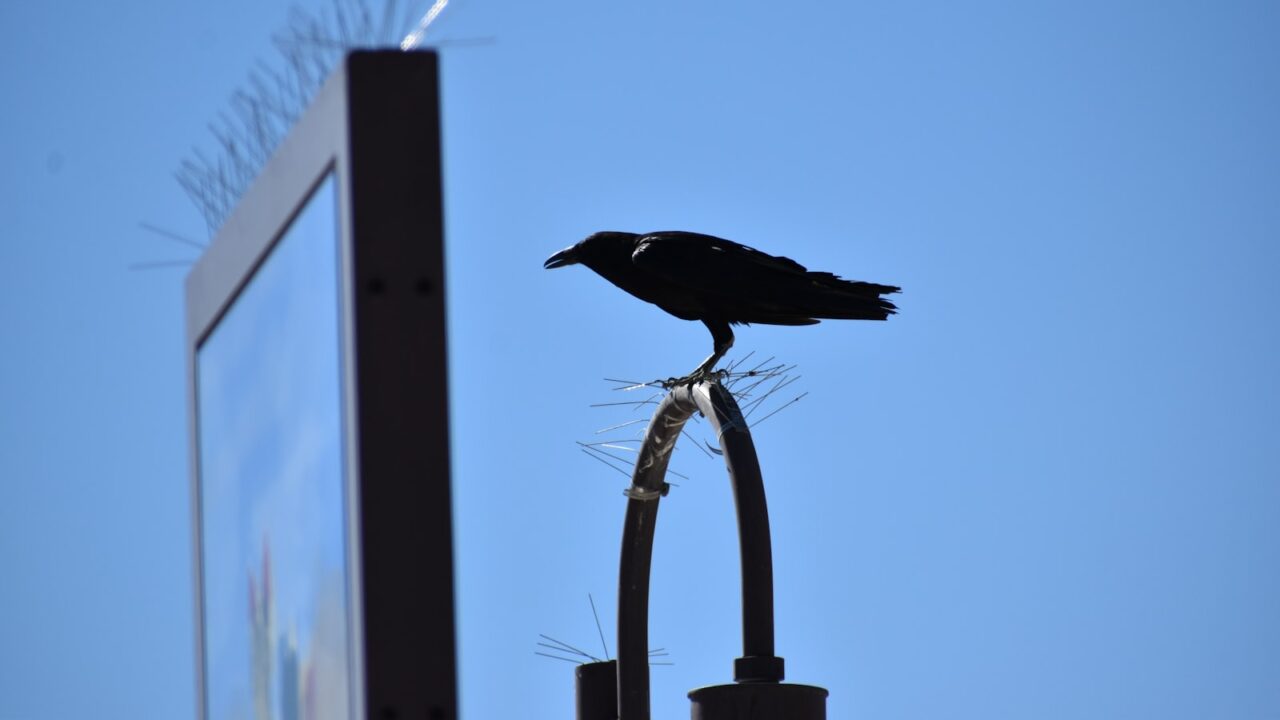
Bird spikes are rows of blunt, upward-pointing rods fixed to a surface. They don’t harm or trap birds — they simply make a flat surface impossible to perch or roost on, so birds move elsewhere.
Bird spikes are best for narrow landing surfaces, such as:
- Ledges and window sills
- Parapet tops and railings
- Aircon compressor units
- Pipes, signage and AC ledges
They’re relatively low-cost, discreet from a distance, and quick to install on suitable edges.
Limits: spikes only protect the strip they cover. Birds can still land on nearby gaps or wider surfaces, and over time spikes can collect leaves or nesting material if not maintained.
How bird netting works
Bird netting is a mesh stretched across or around an opening to physically block birds from entering a space entirely. Rather than deterring perching on a strip, it seals off a whole area.
Netting is best for enclosing larger spaces, such as:
- Balconies and service yards
- Aircon ledges and recesses
- Light wells, voids and gaps between buildings
- Areas where birds roost or nest, not just land
Done properly, netting is very effective because it removes access altogether. It needs careful, tensioned installation to look neat and leave no gaps a bird can squeeze through.
Bird spikes vs netting at a glance
| Factor | Bird spikes | Bird netting |
|---|---|---|
| Best for | Narrow ledges, rails, AC units | Enclosing balconies, recesses, voids |
| How it works | Stops perching on a strip | Blocks entry to a whole area |
| Coverage | The covered edge only | The full opening |
| Visibility | Subtle from afar | Visible mesh |
| Install difficulty | Easy on suitable edges | Needs proper tensioning |
| Maintenance | Clear debris occasionally | Check for sagging or gaps |
Which should you choose?
A simple rule of thumb:
- Spikes when you just need to stop birds *landing* on an edge or unit.
- Netting when you need to keep birds *out of a space* like a balcony or recess.
Many homes use both — spikes on the narrow ledges and netting across the open recess. The right mix depends on where the birds are actually landing and nesting.
Other deterrents worth knowing
Spikes and netting are the most reliable, but you may also see:
- Reflective deterrents and decoys — cheap, but birds often get used to them.
- Gels and slopes — can work on small ledges, but need maintenance in our climate.
- Removing attractants — never feed birds, secure food waste, and clear nesting spots early.
Removing food sources and nesting opportunities makes every physical deterrent work better. No spike or net can compete with a reliable food source nearby, so cutting off what draws birds in is always the first step before fitting hardware.
In Singapore’s HDB and condo settings, the most common trouble spots are aircon ledges, parapet tops and the recesses between blocks — exactly the places where a flat surface or sheltered void invites roosting. Matching the deterrent to the spot is what makes the difference: spikes for the flat edges birds land on, netting for the sheltered gaps they nest in.
Keeping it humane and legal
Whatever you choose, the deterrent should exclude birds, not harm them. Blunt spikes and properly installed netting are designed to do exactly that. Avoid anything that could trap or injure birds, and never disturb an active nest with eggs or chicks — wait until it’s empty, or seek advice first. For broader humane strategies, see our guide to bird control for HDB and condos.
When to call a professional
DIY spikes can work on a simple sill, but professional bird-proofing is worth it when:
- The area is high up or hard to reach safely.
- You need netting tensioned neatly with no gaps.
- Pigeons have already established a roost or nest site.
Professionals assess the whole problem and install deterrents that last, especially for persistent pigeon problems in Singapore.
Durability in Singapore’s climate
Whatever you fit has to survive heat, heavy rain and strong sun, so material quality matters more here than in a temperate climate. For spikes, stainless steel bases and pins outlast plastic, which can grow brittle and crack under prolonged UV. For netting, look for UV-stabilised mesh with rot-resistant fixings; cheap netting sags and frays within a year or two, leaving gaps that defeat the purpose. Both options need the occasional check — clearing leaves and debris from spike rows, and looking for sagging, loose edges or small tears in netting after stormy weather. A well-chosen, well-maintained installation can keep working for years, whereas a bargain product often needs replacing just as the birds return.
Don’t forget the mess they leave behind
Deterrents stop new birds landing, but droppings already present should be cleaned safely, because dried droppings can carry health risks if disturbed and inhaled. Wear gloves and a mask, dampen the area first to reduce dust, and avoid dry-sweeping. Clearing droppings and any old nesting material before fitting spikes or netting also gives a cleaner, longer-lasting result and removes the scent cues that draw birds back to a familiar spot.
Frequently asked questions
Do bird spikes hurt birds?
Will spikes or netting work against pigeons specifically?
Can I install these myself in an HDB flat or condo?
What if there’s already a nest?
Related guides
- Bird control for HDB and condos
- How to get rid of pigeons in Singapore
- How to remove a pigeon nest safely
- How to stop birds nesting on aircon ledge
- Dove vs pigeon: how to tell them apart
*Need spikes, netting or both fitted safely? Get a free bird-proofing quote from Insect Out.*