
Ant Control Singapore
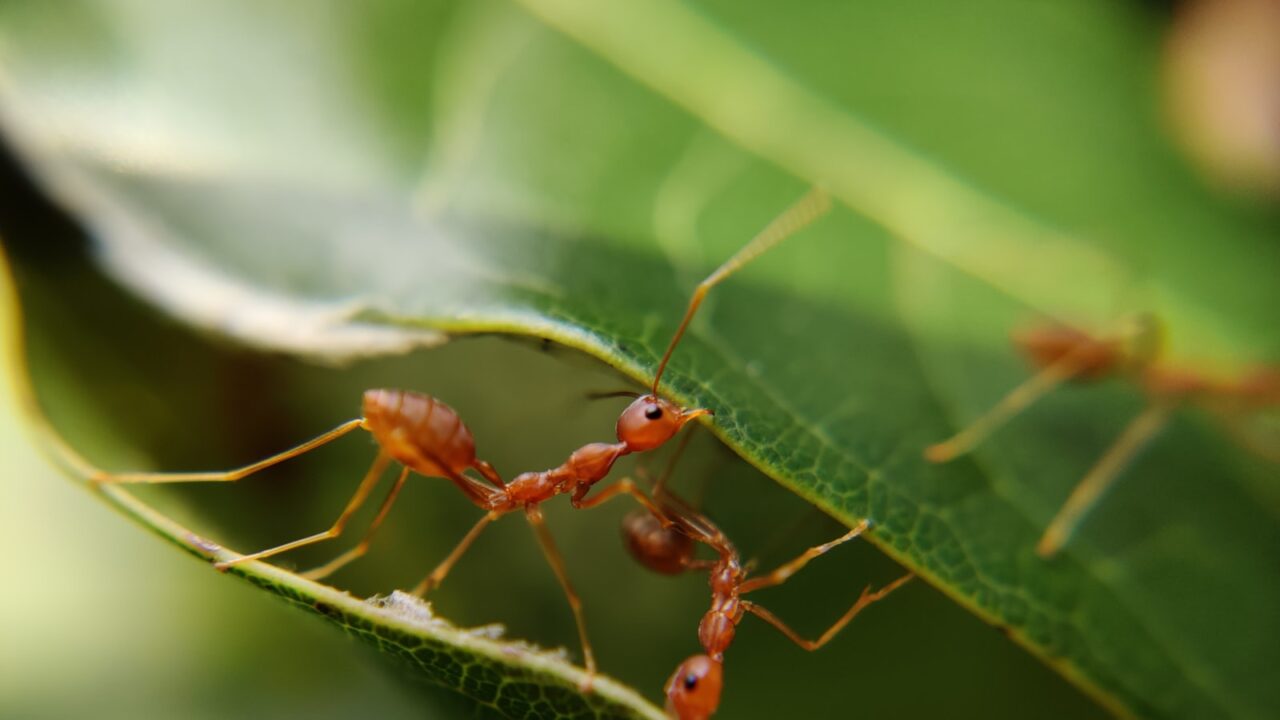
A line of ants marching across the kitchen counter almost always means a colony nearby — often tens of thousands of workers, eggs and queens hidden in a wall void, under the floor, or out in the garden. Singapore’s warm, humid climate suits ants perfectly, and they’re relentless once they find a reliable food or water source. The frustrating part is that spraying the trail you can see only kills foragers and sends the rest looking for a new route in. Effective ant control targets the nest and the queen, so the colony collapses instead of simply relocating. That’s the approach Insect Out takes.
Common ants in Singapore homes
- Sugar ants — the small ants drawn to sweet spills, fruit and food debris on counters and floors. Usually the ones forming neat trails to a crumb or a sticky patch.
- Pharaoh ants — tiny, pale yellow, and notoriously hard to eliminate. Disturb or spray them and the colony “buds” — splitting into several new colonies — which makes them spread instead of disappear. They must be baited, never sprayed.
- Ghost and odorous house ants — common in kitchens and bathrooms, nesting in wall cavities and around plumbing.
- Carpenter and other ants — larger ants that nest in damp or damaged timber, door frames and wall voids; not to be confused with termites.
If you’re not sure what you’re dealing with, our guides to the types of ants in Singapore and tiny ants in the kitchen can help you narrow it down. It’s also worth knowing how to tell ants from termites, since the two are easy to mix up.
Why spraying the trail backfires
Repellent sprays kill the visible workers but leave the queen and brood untouched — and with most species, the colony just sends foragers in by another path within days. With pharaoh ants it’s worse: spraying triggers budding, turning one colony into several. Lasting control depends on the workers carrying a slow-acting bait back to the nest, where it reaches the queen and the rest of the colony before they realise anything is wrong. That’s why patience and the right bait beat a can of spray every time. Our guide on getting rid of ants permanently explains the principle in more detail.
Signs of an ant problem
- Steady trails of ants along skirting, counters, window frames or plumbing.
- Ants appearing around the bin, pet bowl, sink or any sweet or greasy residue.
- Small piles of soil, fine sawdust-like debris, or winged ants near walls and timber.
- Ants returning within days no matter how often you wipe the trail away.
How we clear them
- Identify — we confirm the species and trace the trails back to the nest or entry point. Species matters, because baiting a sugar ant is different from baiting a protein-seeking colony.
- Bait and treat — we use colony-targeting gel and granular baits that workers carry home, plus targeted treatment of entry points and voids where needed. The aim is to wipe out the queen and brood, not just the foragers.
- Prevent — we seal entry gaps and advise on removing the food and moisture that drew them in.
What ant control costs in Singapore
A single ant treatment for an HDB flat or condo is one of the more affordable pest jobs, while persistent pharaoh-ant or multi-nest infestations in larger homes may need a couple of visits to fully clear. Cost depends on the species, the size of the property, and how widespread the trails are. We quote clearly before any work starts. For context on what to expect, see pest control prices in Singapore and how to choose a pest control company.
Keep them out for good
Ants come back when food, water and easy entry are still on offer. The fundamentals:
- Remove the food: wipe up spills immediately, store dry goods and sweets in sealed containers, take out the bin regularly, and don’t leave pet food down overnight.
- Cut the water: fix dripping taps and dry sinks — ants are often after moisture as much as food, especially in bathrooms.
- Seal the entries: caulk gaps around windows, doors, pipes and skirting where trails come in.
- Screen the openings: insect mesh screens on windows and doors block flying ant swarms and reduce the insects that draw ants indoors.
For natural deterrents and DIY options, see our guides to natural ant repellent, whether vinegar gets rid of ants and homemade ant traps and bait.
Frequently asked questions
Why do ants keep coming back to my kitchen?
Should I clean the ant trail before treatment?
Are ants in the house harmful?
How long until the ants are gone?
Are carpenter ants the same as termites?
Related guides
- How to get rid of ants in Singapore
- How to get rid of ants in the kitchen
- How to get rid of ants permanently
- How to get rid of ants in your car
- Types of ants in Singapore
*Tell us where the ants are below for a free quote.*
Ready to keep the bugs out?
Get a free, no-obligation quote tailored to your windows.
Get a free quote
Tell us about your windows and we’ll connect you with a trusted installer.