How to Get Rid of Ants in Your Car (Singapore)
A few crumbs, a sweet spill, and suddenly there’s a trail of ants marching across your dashboard. Ants in a car are common in Singapore — our warm, humid weather keeps colonies active year-round, and a vehicle parked near grass or a bin is an easy target. Here’s how to clear them and keep them out.
Why ants invade cars
Ants are after food, water and sometimes shelter. A car offers all three when:
- There are crumbs, spills or food packaging left inside.
- The car is parked near their nest — under trees, beside grass verges, or near bins.
- Branches or grass touch the vehicle, giving ants a bridge in.
- There’s moisture from a leak, damp mat or spilled drink.
Sometimes the ants don’t even live in the car — they’re just foraging from a nearby nest and following a scent trail to a food source inside.
Clean out the food source
This is the most important step. No food, no reason for ants to stay.
- Remove all rubbish, wrappers, bottles and bags.
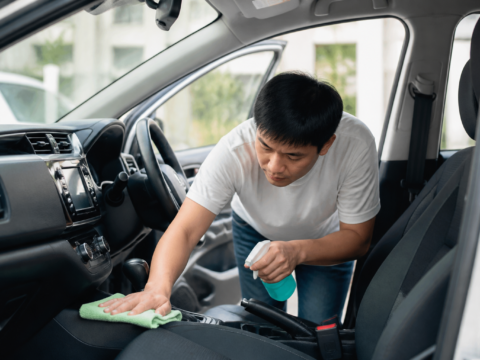
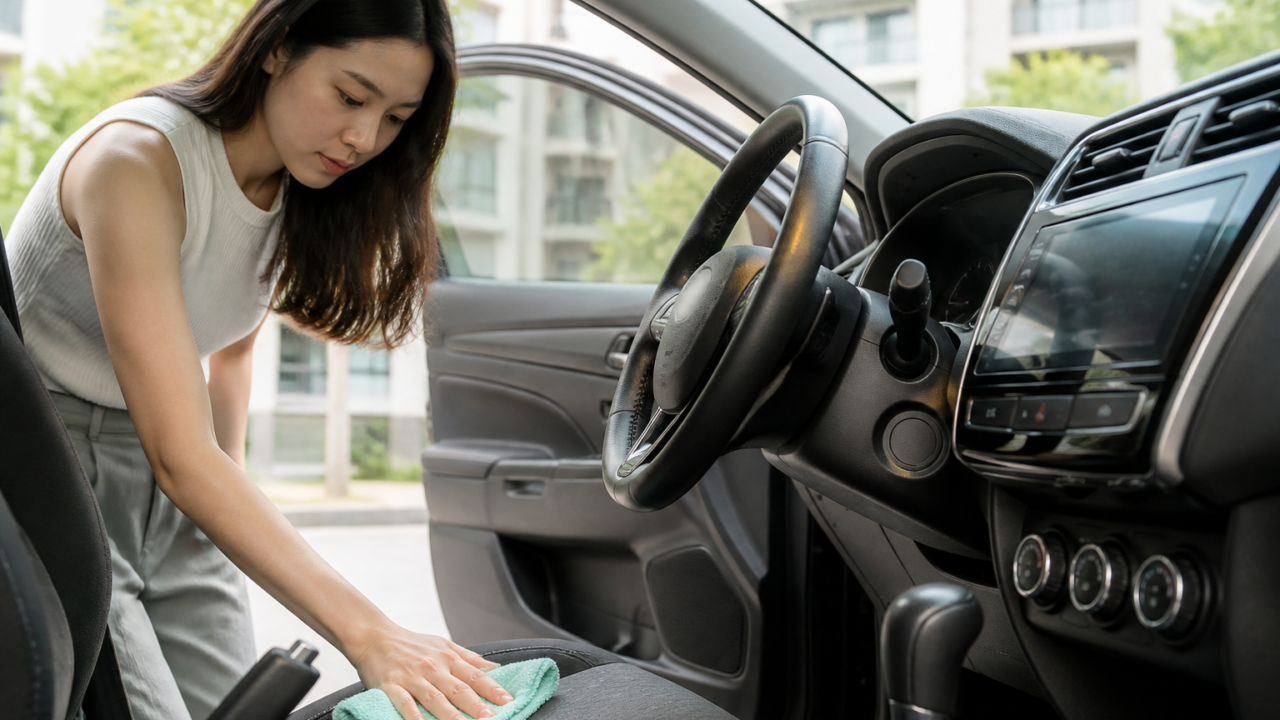
- Vacuum thoroughly — seats, rails, footwells, boot and between cushions.
- Wipe down sticky spots: cup holders, gear console, door pockets, child seats.
- Pay special attention to anywhere sweet drinks may have spilled.
Child seats are a classic hotspot in family cars — crumbs collect in every crevice. Take them out and clean them separately.
Break the trail and bait
Ants follow scent trails. Wipe down surfaces with a mild detergent or vinegar solution to erase the chemical trail they’re using. Then deal with the colony:
| Method | Notes |
|---|---|
| Ant bait / gel | Place small amounts where you see trails; ants carry it back to the nest |
| Sticky traps | Useful to monitor activity |
| Avoid heavy spraying | You sit in this cabin — over-spraying insecticide isn’t ideal |
Bait beats spray here. Spraying kills the foragers you see but leaves the nest intact, so they keep coming. Bait targets the colony at the source.
Move the car and clear the surroundings
If ants are foraging from a nearby nest:
- Park somewhere different for a few days to break the cycle.
- Avoid parking under trees or beside grass and bins where you can.
- Make sure no branches, leaves or grass are touching the bodywork.
Removing the bridge and the trail often stops the problem without anything else.
Why spraying alone fails
It’s tempting to grab an insecticide spray and blast the trail. The ants you can see are foragers — only a small fraction of the colony. Kill them and the nest simply sends more, so the trail returns in a day or two. Worse, with some species like pharaoh ants, the wrong treatment can cause the colony to bud and split into several nests, making the problem bigger.
This is why bait works better than spray in a car. The foragers carry the bait back and feed it to the colony, including the queen, so the source is dealt with rather than just the visible ants. It takes a little patience but it actually solves the problem.
Keep them from coming back
- No eating in the car, or clean up straight after.
- Keep the interior crumb-free with regular vacuuming.
- Don’t leave food, sweets or pet treats in the cabin or boot.
- Fix any damp or leaks promptly.
- Rotate parking spots if one location keeps drawing ants.
When to get help
If ants keep returning no matter how clean the car is, the nest is likely close by — at home, in your carpark, or in landscaping near your usual spot. In that case, treating the source matters more than treating the car.
Professional ant control targets the colony properly, which is especially important with species like pharaoh ants that can split and spread if handled wrongly. For more on dealing with ants generally, see our guide on how to get rid of ants in your home.
Know which ant you’re baiting
Not all ants respond the same way, and using the wrong product can make matters worse. Tiny ants trailing across the dashboard are often the same household species you’d find in the kitchen — our guide to the types of ants in Singapore helps you tell them apart. The important one to identify is the pharaoh ant, because spraying it can trigger the colony to split, or “bud”, into several smaller nests. For these, slow-acting bait is essential: the foragers must survive long enough to carry it home and feed the queen. If you’re choosing a product, our roundup of the best ant traps and bait stations and the best ant killer in Singapore covers options that suit a small, enclosed cabin.
For a lasting fix that goes beyond the car, how to get rid of ants permanently tackles the nest at source — which is usually what’s needed when a car keeps getting re-invaded.
Frequently asked questions
Will the ants damage my car?
Is bait safe to leave in a hot car?
Why do they keep coming back?
Related guides
- How to get rid of ants in your home
- Types of ants in Singapore
- Best ant traps and bait stations
- How to get rid of ants permanently
- How to get rid of cockroaches in your car
Ants in your car almost always trace back to food and a nearby nest. Clean the cabin, break the trail, bait the colony, and park smart — and they’ll stop hitching a ride.
*Ant trails that won’t quit? Get professional ant control.*