Best Ant Traps & Bait Stations: A Singapore Guide
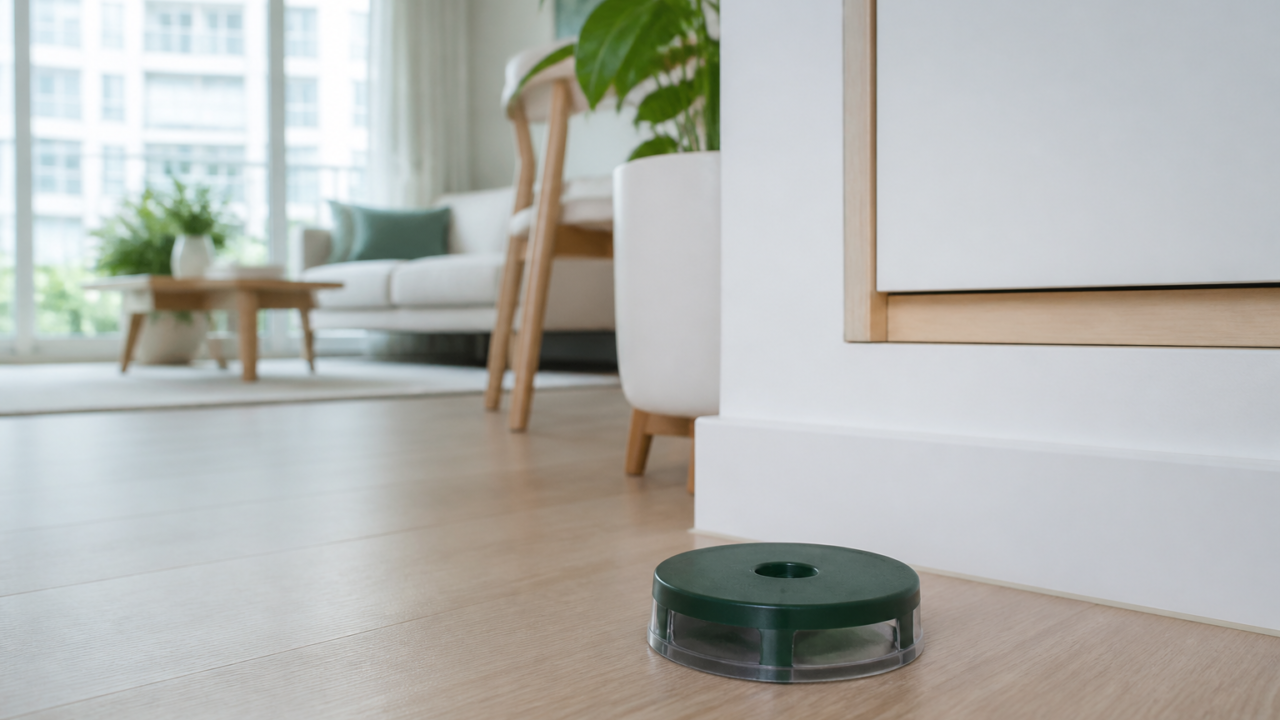
When ants keep marching across your kitchen, the right ant trap can do what spraying never will: wipe out the colony at its source. But not all bait stations are equal, and placement matters as much as the product. This Singapore guide explains how an ant trap actually works, what to look for when choosing one, and how to place it so the whole nest collapses — not just the few ants you can see.
How an ant trap actually works
A good ant trap isn’t a sticky pad that catches ants. It’s a bait station: a small container holding food laced with a slow-acting insecticide.
The logic is simple but clever:
- Foraging ants find the bait and carry it back to the nest.
- They share it with other workers, the larvae and the queen.
- The slow-acting ingredient lets it spread before ants die.
- Without a queen, the colony collapses over days to a couple of weeks.
That’s why bait beats spray. Spraying kills the foragers you see but leaves the queen breeding more. A proper ant trap turns the ants into delivery agents against their own nest.
What to look for when choosing an ant trap
Use these criteria rather than chasing a particular brand.
- Slow-acting active ingredient. Common types include borax/boric acid, fipronil or hydramethylnon. Slow is the point — it must reach the nest before workers die.
- Bait type matches the ants. Ants switch preferences between sweet and protein/grease-based food. Choose a sugar-based bait for sweet-seeking ants, or a protein/oil bait if they ignore sweets.
- Enclosed, child- and pet-safe design. A sealed station keeps the insecticide away from curious hands and paws — important in family HDB flats.
- Pre-filled, ready-to-use stations for convenience, or gel/liquid bait for flexible placement in cracks.
- Enough units to place several around the active area, not just one.
| Bait base | Best for | Note |
|---|---|---|
| Sweet (sugar/liquid) | Sweet-loving foragers | Most common kitchen ants |
| Protein/grease | Ants ignoring sweets | Switch if sweet bait is refused |
| Gel | Cracks and edges | Flexible placement |
How to place bait stations for best results
Placement is where most people go wrong. Get this right and results follow.
- Put bait on the trail, not away from it. Place stations directly along the lines of marching ants and near entry points.
- Don’t kill the foragers. Resist spraying or wiping the trail — you need ants alive to carry bait home.
- Use several stations. Spread them along skirting, under the sink, behind the bin and near window frames.
- Expect more ants at first. A surge as they swarm the bait is normal and a good sign; numbers drop afterwards.
- Leave them undisturbed for one to two weeks. Don’t clean the area while baiting.
Prefer a DIY version? Our guide to homemade ant traps and bait shows how to make an effective borax-sugar bait at home.
Mistakes that stop ant traps working
A few common errors waste good bait:
- Spraying near the bait — repellent sprays drive ants away from the station.
- Wrong bait flavour — if ants ignore it within a day, switch sweet for protein or vice versa.
- Cleaning too soon — wiping the trail breaks the supply line to the nest.
- Too few stations — one trap rarely reaches a large colony.
- Impatience — pulling bait early, before the queen is affected.
For broader prevention and species ID, see how to get rid of ants in Singapore.
When bait stations aren’t enough
DIY bait stations handle most household ant trails. But some cases need professional help:
- Trails that return repeatedly despite correct baiting.
- Signs of multiple nests or a supercolony.
- Ants nesting inside walls, ceilings or electrical fittings.
- Biting species near children or pets.
Ants spread easily between units in Singapore’s HDB blocks and condos, so the source may be beyond your reach. A licensed technician can identify the species and treat the nest directly. Learn more about professional ant control in Singapore when an ant trap alone can’t keep up.
Gel bait vs. pre-filled stations
Both are ant traps in the broad sense, but they suit different situations:
- Pre-filled bait stations are enclosed and tidy — the safest pick around children and pets, and easy to place along skirting. The trade-off is a fixed bait type, so if your ants ignore the flavour you can’t adjust it.
- Gel and liquid baits let you place small dabs exactly on the trail and in cracks, and switch between sweet and protein formulas. They’re more flexible but need careful placement out of reach of curious hands and paws.
Many homes use both: stations for general coverage, gel for pinpointing active trails. For comparison with sprays and other products, see our best ant killer in Singapore guide.
Sweet vs. protein: read your ants
The single biggest reason a bait “fails” is the wrong flavour. Ants shift between craving sugars and craving proteins or grease depending on the colony’s needs. If a sweet bait draws a crowd then gets ignored after a day, switch to a protein/grease formula — and vice versa. Identifying the species helps too; our guide to types of ants in Singapore explains which local ants prefer what.
Frequently asked questions
Are ant traps safe around children and pets?
Why are there more ants after I put bait down?
How long do ant baits take to work?
Related guides
- How to get rid of ants in Singapore
- Homemade ant traps and bait
- Best ant killer in Singapore
- How to get rid of ants in the kitchen
- Types of ants in Singapore
Choose a slow-acting bait, match the flavour to your ants, place stations on the trail, and stay patient — that’s how a simple ant trap clears the whole colony.
*Baiting and still battling ants? Get a free quote for professional ant control in Singapore today.*