Bed Bug Heat Treatment in Singapore: How It Works & Cost
If chemical sprays haven’t cleared your bed bugs — or you’d rather avoid repeated pesticide applications — bed bug heat treatment is the alternative worth understanding. It works by raising the temperature of a room or your belongings to a level that’s lethal to bed bugs at every life stage, including the eggs that sprays often miss. This guide explains how heat treatment works, how it compares with chemical treatment, its limitations, and how to prepare so the money is well spent.
How bed bug heat treatment works
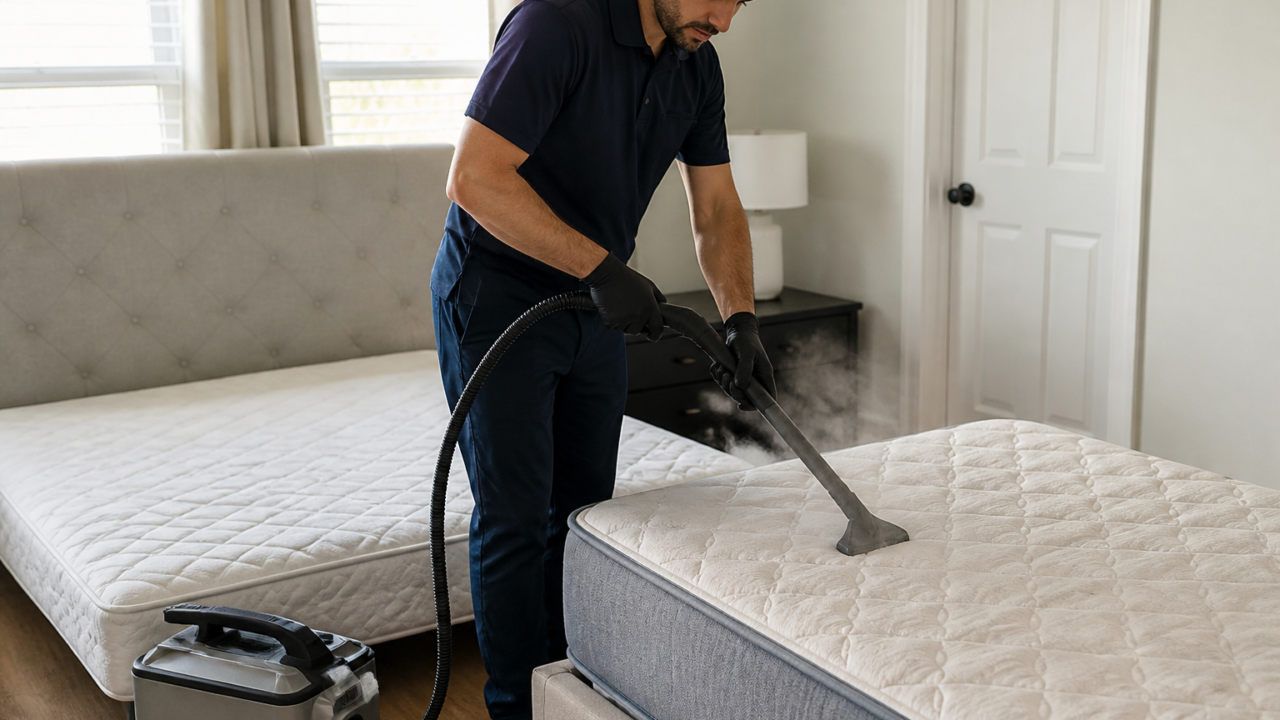
Heat treatment is exactly what it sounds like: a professional uses specialised electric heaters and fans to lift the temperature of the treated space well above what bed bugs can survive, then holds it there long enough to reach every hiding spot.
- Whole-room treatment: technicians heat the entire room — furniture, mattress, skirting, wall cracks and all — to a sustained lethal temperature, typically well above 45°C, for a set period.
- Fans circulate the hot air so it penetrates into mattress cores, cushion stuffing, cracks and joints where bed bugs shelter.
- Sensors monitor temperature at multiple points to confirm the lethal threshold is reached in the coldest spots, not just the middle of the room.
- Chamber or container heating: for items rather than a whole room — luggage, clothing, books, small furniture — heat can be applied inside a purpose-built heat chamber.
The principle is simple, but doing it safely and evenly is not, which is why it’s a professional job rather than a “turn up the aircon heater” exercise.
Why heat kills every life stage — including eggs
This is heat treatment’s biggest advantage. Bed bug eggs are notoriously tough and resist many over-the-counter chemicals, so infestations treated with sprays alone can rebound as a new batch hatches. Heat sidesteps that problem entirely:
- Bed bugs and their eggs die when held at a sufficiently high temperature for long enough.
- Because heat reaches into the cracks and cushioning where eggs and hidden nymphs sit, it targets all life stages at once — eggs, all five nymph stages, and adults.
- There’s no residue to hatch through the way there can be after a partial chemical treatment.
For context on the stages heat needs to reach, see our guides to what bed bugs look like and baby bed bugs (nymphs).
Heat vs chemical treatment
Neither method is “best” for every situation — they solve different problems, and many providers use them together. Here’s a plain comparison:
| Factor | Heat treatment | Chemical treatment |
|---|---|---|
| Kills eggs | Yes, reliably | Variable; often needs repeat visits |
| Residual protection | None once the room cools | Residual insecticide keeps working for weeks |
| Number of visits | Often a single session | Usually two or more visits |
| Chemical exposure | Minimal to none | Insecticide used in the home |
| Item risk | Heat-sensitive items must be removed | Some items must be cleared or covered |
| Re-infestation defence | No lingering barrier | Residual layer deters stragglers |
A common approach in Singapore homes is heat to knock the whole population down fast, plus a residual chemical application to catch any bed bugs that wander back in afterwards. If you’re weighing the options, our overview of bed bug treatment in Singapore and the bed bug exterminator process explains how providers combine methods.
Limitations and preparation
Heat treatment is powerful but not a magic wand. Know its constraints before booking:
- Heat-sensitive items must be removed. Electronics, aerosols, candles, medications, certain plastics, musical instruments and pressurised containers can be damaged or unsafe at treatment temperatures. Your provider will give a removal list.
- No lasting barrier. Once the room cools, there’s nothing stopping new bed bugs from being carried back in — so source control and prevention still matter.
- Even heating is essential. Cold spots (thick mattresses, cluttered corners) can shelter survivors if the job isn’t done properly, which is why monitored, professional treatment matters.
- Clutter slows it down. The more clutter, the harder it is for heat to reach every gap.
Typical prep includes decluttering, laundering and hot-drying bedding beforehand, removing the items on the provider’s exclusion list, and arranging for people and pets to be out during treatment. Your technician will give you a specific checklist.
When heat treatment is worth it
Heat is often the better choice when:
- You want to avoid repeated pesticide use in a bedroom, especially with young children or sensitive occupants.
- Previous chemical treatments haven’t worked and eggs keep hatching.
- You need a fast, single-session knockdown of an established infestation.
- The infestation is concentrated in one room or a defined set of belongings.
Chemical treatment may suit you better where budget is tight, where residual protection is valuable, or where the layout makes even heating difficult. The honest answer is that it depends on your home and infestation — which is why a proper inspection comes first.
What affects the cost
Bed bug heat treatment is priced per situation rather than a fixed rate. The main factors are:
- Room size and number of rooms to be treated.
- Severity of the infestation and how much it has spread.
- Property type — HDB flat, condo or landed home.
- Amount of clutter and prep required.
- Whether heat is combined with a residual chemical follow-up.
Because these vary so widely, the sensible step is a free quote after an inspection rather than a number over the phone.
Frequently asked questions
Does heat treatment kill bed bug eggs?
Is one heat treatment session enough?
Is bed bug heat treatment safe for my home?
Heat or chemical treatment — which is better?
How do I prepare for heat treatment?
Related guides
- Bed bug treatment in Singapore
- Bed bug exterminator in Singapore
- What do bed bugs look like?
- Baby bed bugs (nymphs): what they look like
- How to check for bed bugs
*Ready to clear bed bugs for good? Get a free quote from Insect Out for professional bed bug treatment.*