Baby Bed Bugs (Nymphs): What They Look Like & What It Means
Spotted something tiny, pale and almost see-through crawling on your mattress? Those may be baby bed bugs, known as nymphs — and finding them is more significant than finding a single adult. Nymphs are young bed bugs that hatched on site, so their presence usually means an active, breeding infestation rather than a one-off hitchhiker. This guide explains what baby bed bugs look like, the stages they pass through, and why they change everything about how you should respond.
What baby bed bugs look like
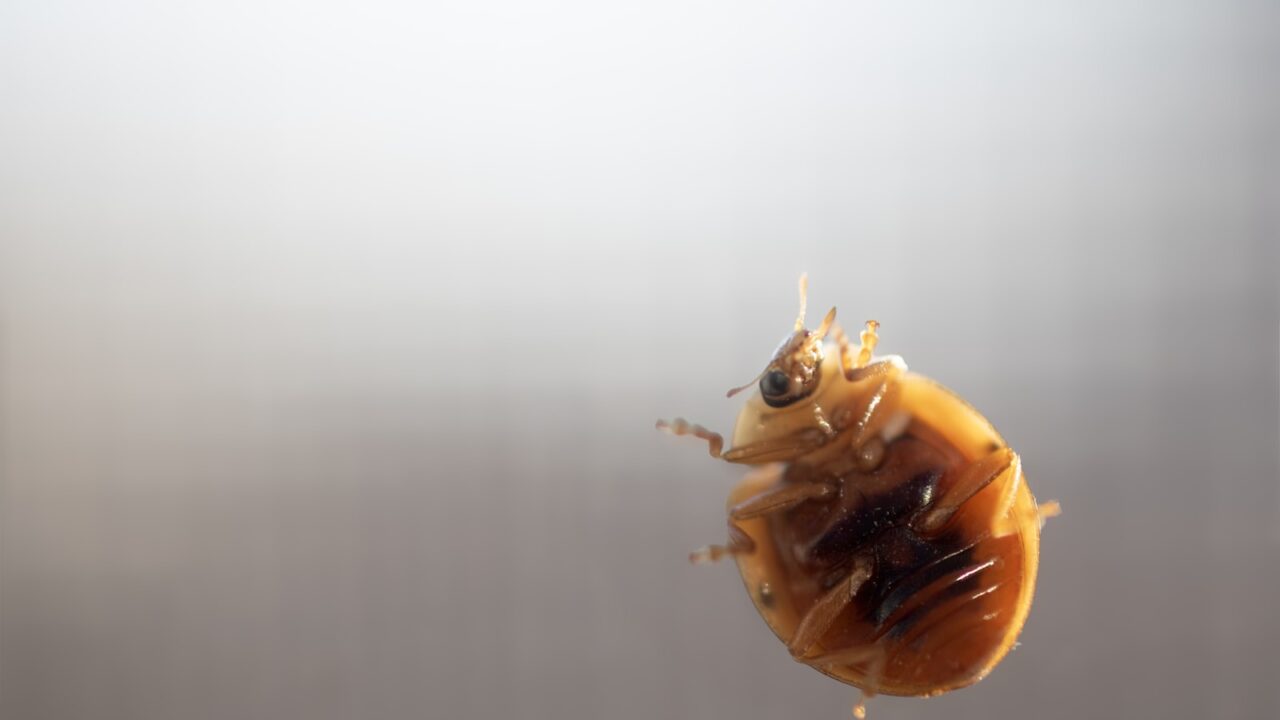
A newly hatched bed bug is tiny — around 1 to 1.5 mm, roughly the size of a pinhead or a poppy seed. Key features:
- Colour: pale, whitish-yellow, translucent or almost clear when unfed. This is the biggest difference from the reddish-brown adults.
- Shape: the same flat, oval body as an adult, just smaller and paler — like a scaled-down version.
- After feeding: a fed nymph shows a bright red or dark centre where the blood meal is visible through its translucent body. This is often the first time people notice them.
Because they’re so pale and small, nymphs are easy to overlook on white sheets and light mattresses. They’re most visible right after a blood meal, when the red centre stands out. For a full side-by-side of every stage, see what bed bugs look like.
The five nymph stages and shed skins
Bed bugs don’t grow gradually the way we do. They pass through five nymph stages (instars), and to move from one to the next each nymph must take a blood meal and then moult — shedding its outer skin.
- Each stage is slightly larger than the last, running from about 1.5 mm up to nearly adult size.
- With every moult, the nymph leaves behind a pale, empty shell — a translucent cast skin shaped like the bug itself.
- Under Singapore’s warm indoor conditions, a nymph can reach adulthood in a matter of weeks when meals are available.
Those shed skins are one of the clearest signs of a breeding population. Finding little pale husks in mattress seams, along the bed frame or in cracks tells you nymphs are actively growing and moulting there — not just visiting.
Why finding nymphs means an active infestation
This is the crucial point. A lone adult bed bug could have arrived on a bag, on clothing or on second-hand furniture without ever settling in. But nymphs are different:
- Bed bugs don’t travel as babies — nymphs hatch from eggs laid in your home.
- Their presence means there is a mated female laying eggs on site.
- Multiple stages present at once — eggs, small nymphs, larger nymphs and adults — indicates an established, reproducing population, not an early stray.
In short, seeing baby bed bugs tells you the infestation has taken hold and is generating new generations. That’s why it usually calls for a thorough, professional response rather than spot-treating a single bug.
Where to look for baby bed bugs
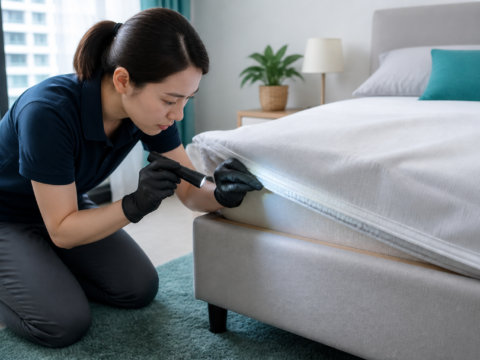
Nymphs stay close to their food source — you — and hide in the same tight spots as adults, often clustered near the eggs they hatched from. Check with a torch:
- Mattress seams, piping and tufts, and the underside of the mattress.
- The box spring, bed slats and base, including screw holes and joints.
- The headboard and frame — cracks, joints and where it meets the wall.
- Skirting boards and wall cracks near the bed, and behind loose wallpaper.
- Nearby sofas, cushions and upholstered chairs.
Look for the nymphs themselves, the pale shed skins, tiny white eggs in clusters, and dark digested-blood spots. Our guide on how to check for bed bugs walks through the inspection step by step.
Why DIY often fails against nymphs
Baby bed bugs make an infestation harder to clear, not easier:
- Eggs are resistant. Many over-the-counter sprays don’t reliably kill eggs, so a fresh batch of nymphs hatches after you think you’re done.
- Nymphs hide deep. Their small, flat bodies fit into gaps a spray nozzle can’t reach.
- The cycle is fast. Miss a few, and the population rebuilds within weeks.
To break the cycle you need a method that reaches every life stage, including eggs. That’s where professional bed bug treatment in Singapore — chemical, heat, or a combination — comes in, because it’s designed to target the whole population, not just the bugs you can see.
What to do if you find them
- Don’t start moving things around — shifting an infested mattress or furniture to another room can spread bed bugs through your home.
- Confirm the ID using the size, colour and shape above, and look for shed skins and eggs.
- Contain, don’t scatter. Avoid dragging bedding across the flat or to a neighbour’s.
- Wash and hot-dry bedding and clothing on the highest safe heat as an interim step.
- Book a professional inspection, since visible nymphs signal an established infestation.
Frequently asked questions
What do baby bed bugs look like?
Are baby bed bugs white or clear?
Does seeing baby bed bugs mean a bad infestation?
What are the tiny white shells on my mattress?
Can I get rid of baby bed bugs myself?
Related guides
- What do bed bugs look like?
- How to check for bed bugs
- Bed bug heat treatment in Singapore
- Bed bug treatment in Singapore
- Bed bug exterminator in Singapore
*Found baby bed bugs on your mattress? Get a free quote from Insect Out for professional bed bug treatment.*