Bed Bug Eggs: What They Look Like & How to Kill Them
Bed bug eggs are the reason an infestation keeps coming back even after you think you’ve killed the adults. They’re tiny, well hidden, and shrug off many sprays. If you’re dealing with bites in your HDB flat or condo, knowing what bed bug eggs look like — and what truly destroys them — is the key to actually clearing the problem. Here’s how to identify them and break the cycle.
What bed bug eggs look like
Bed bug eggs are very small but visible if you know what to look for.
- Size: about 1mm long — roughly the size of a grain of salt or a pinhead.
- Colour: pearly white to pale, slightly translucent.
- Shape: elongated oval, like a tiny grain of rice.
- Texture: sticky when laid, so they cling firmly to surfaces.
A single female can lay several eggs a day and hundreds over her lifetime. They’re often laid in clusters and held in place by a glue-like coating, which is why a quick vacuum or wipe rarely removes them all.
Freshly hatched eggs leave behind a pale, empty shell. Spotting many of these together is a strong sign of an active, breeding population.
Where to find bed bug eggs
Bed bugs lay eggs in tight, dark, undisturbed spots close to where you sleep. Check carefully in:
- Mattress seams, piping and tags.
- The box spring and bed frame joints.
- Headboard cracks and screw holes.
- Behind the bed’s wall area and skirting.
- Sofa seams and cushion folds.
- Cracks in wooden furniture near the bed.
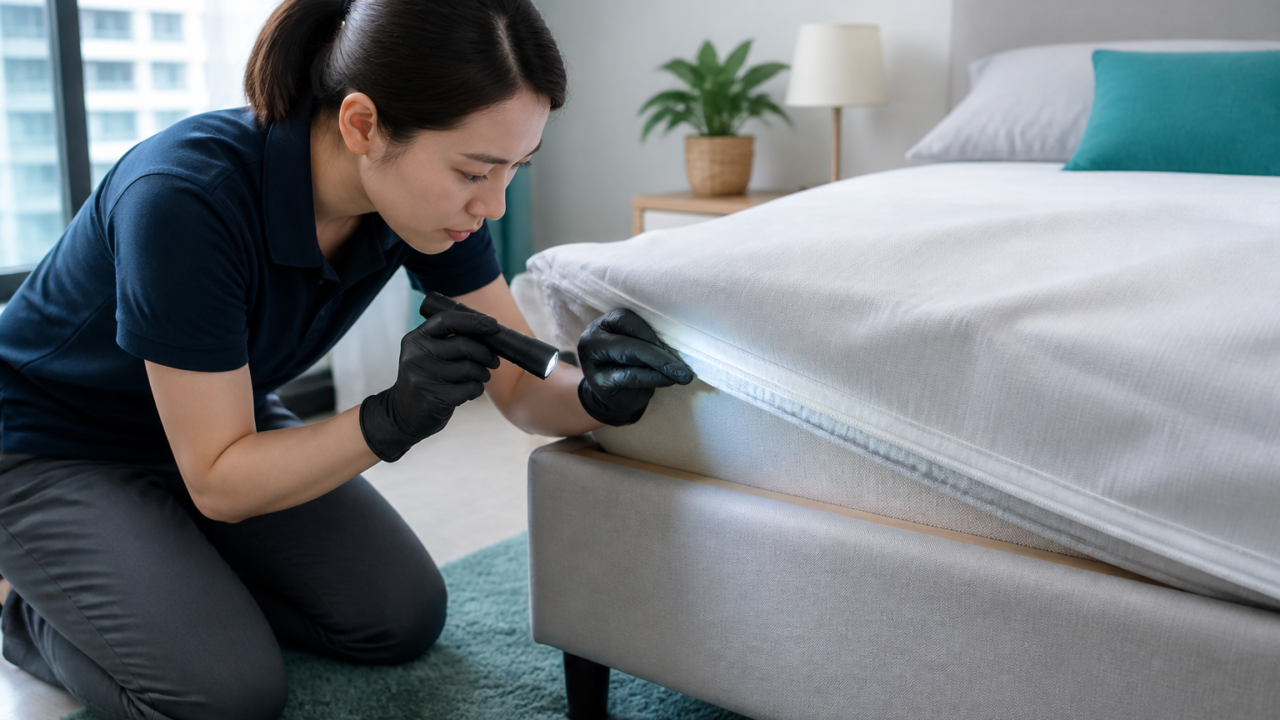
Use a torch and an old card to scrape along seams. Alongside eggs you may see other clues: rusty or dark spots (droppings), shed skins, and the bugs themselves. Our guide on how to check for bed bugs walks through a full inspection.
Why bed bug eggs make infestations so stubborn
Eggs are the hidden engine of any bed bug problem, and they’re built to survive.
- They’re protected. The shell shields the developing bug from many contact sprays, so treatments that kill adults may leave eggs unharmed.
- They keep hatching. Eggs hatch in about 6–10 days in Singapore’s warm indoor temperatures. Kill every adult today and a new generation can appear next week.
- They’re hidden. Tucked deep in seams and cracks, many are simply missed during DIY cleaning.
This is why people think they’ve solved a bed bug problem, only to be bitten again days later. If treatment doesn’t account for the eggs, the cycle restarts.
What actually kills bed bug eggs
Destroying eggs takes methods that reach into hiding spots or use lethal heat.
Heat. Sustained high temperatures kill all stages, including eggs. You can:
- Wash bedding and clothes on the hottest cycle, then tumble dry hot.
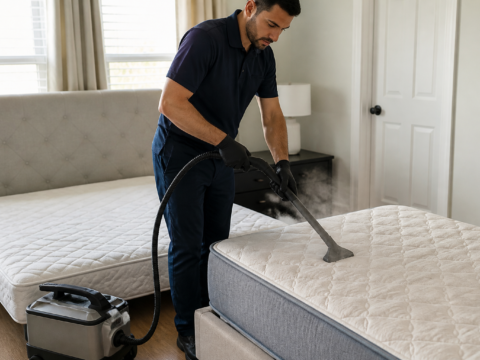
- Steam mattress seams, frames and skirting slowly so the heat penetrates.
- Bag and hot-wash anything fabric near the bed.
Physical removal. Vacuum seams and cracks thoroughly, then seal and discard the bag immediately. Scrub along seams to dislodge stuck eggs.
Encasements. A quality mattress and box-spring encasement traps any remaining bugs and eggs inside, where they eventually die and can’t bite you.
Follow-up. Because eggs hatch after treatment, you must repeat or schedule a second pass roughly a week later to catch newly hatched bugs before they breed.
When to call a professional
DIY can help, but bed bugs — and especially their eggs — are notoriously hard to fully clear alone. In dense HDB blocks and condos, they spread between units and resist many over-the-counter products.
Call a professional if:
- Bites and live bugs keep returning after your efforts.
- You find eggs in multiple rooms or furniture.
- You can’t reach all the cracks and seams involved.
Licensed technicians use a combination of targeted treatment and heat, with planned follow-up visits to cover the egg-hatch window — the part DIY most often misses. Learn more about professional bed bug treatment in Singapore to break the cycle properly.
How long until eggs hatch and bugs return
Timing is everything with bed bug eggs. In the warm indoor temperatures of a Singapore home, eggs typically hatch in about 6–10 days. The newly emerged nymphs need a blood meal within days and can reach breeding adulthood in roughly a month. That hatch window is exactly why a single treatment so often fails — kill the adults, miss the eggs, and a fresh generation appears the following week. Understanding the full timeline helps you plan a second pass; our guide on how long bed bugs live covers the life cycle in detail.
Stop new eggs arriving
Destroying the eggs you have only solves half the problem if more keep coming in. Bed bugs and their eggs hitchhike on luggage, second-hand furniture and bags. To cut the risk:
- Inspect second-hand mattresses and sofas along every seam before bringing them home.
- Keep luggage off the bed after travelling and check it carefully.
- Reduce clutter near the bed so there are fewer crevices for eggs.
For the bigger picture, see how to prevent bed bugs and where bed bugs come from.
Frequently asked questions
Can you see bed bug eggs with the naked eye?
Do sprays kill bed bug eggs?
How many eggs does one bed bug lay?
Where are eggs most often missed?
Related guides
- How to check for bed bugs
- How to get rid of bed bugs
- What kills bed bugs instantly
- How to prevent bed bugs
- How long do bed bugs live
Find and destroy the eggs, repeat after they hatch, and you stop the next generation before it starts.
*Still finding bed bug eggs after treating? Get a free quote for professional bed bug treatment in Singapore today.*