How Long Do Bed Bugs Live? (Why They’re So Hard to Kill)
If you’ve ever wondered why bed bugs keep coming back even after you’ve cleaned and sprayed, the answer lies in their biology. How long do bed bugs live? Far longer than most pests — and they can survive months without a single meal. That resilience is exactly why infestations persist and why proper treatment matters in Singapore’s warm, humid homes.
How Long Do Bed Bugs Live?
An adult bed bug typically lives for several months to about a year, depending on temperature, humidity and how often it feeds. In warm conditions like Singapore’s, their life cycle runs faster, which means populations can build quickly once they’re established.
A bed bug passes through several stages:
- Egg — tiny, pale and glued into crevices; hatches in roughly one to two weeks.
- Nymph — five immature stages, each needing a blood meal to moult.
- Adult — feeds, mates and lays eggs, with females producing many eggs over their lifetime.
In the warm indoor temperatures common here, the journey from egg to breeding adult can take only a few weeks — so a small problem doesn’t stay small for long.
Why They Survive So Long Without Feeding
The trait that frustrates homeowners most is starvation tolerance. Bed bugs can go a long time — often many weeks to months — between blood meals, slowing their metabolism to wait it out.
This is why:
- Leaving a room empty for a holiday rarely starves them out.
- Bugs can survive hidden in unused furniture or luggage for a long time.
- “I haven’t seen them in a while” doesn’t mean they’re gone — they may simply be waiting.
Why This Makes Them Hard to Kill
Understanding how long bed bugs live explains why DIY treatment so often fails:
| Challenge | Why it matters |
|---|---|
| Long lifespan | Survivors keep breeding for months |
| Survive without feeding | Can’t be starved out by leaving rooms empty |
| Eggs resist many sprays | Surface sprays often miss eggs, which then hatch |
| Many hiding spots | Bugs tuck into seams, joints and cracks sprays don’t reach |
| Fast breeding in warm homes | Missed bugs rebound quickly in Singapore’s climate |
Kill the adults you can see, and the eggs and hidden nymphs simply repopulate. That’s the core reason a half-treatment leaves you back at square one.
What This Means for Treating Them
Because bed bugs live long, breed fast and hide well, effective treatment has to be thorough and reach every stage:
- Inspect everywhere — mattress seams, bed frame joints, headboard, skirting, nearby furniture and luggage.
- Target eggs and adults, not just the bugs you see.
- Treat in the right places, where bugs actually harbour.
- Follow up, because eggs can hatch after the first treatment.
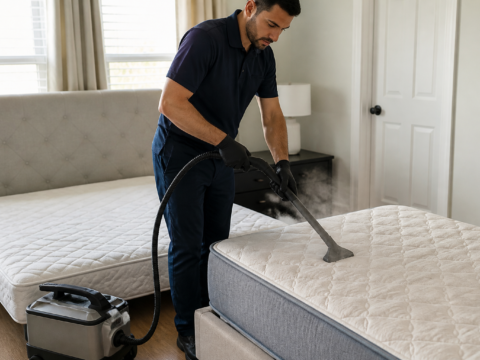
Heat-based and properly applied professional treatments are designed to reach hidden bugs and eggs, which is why they succeed where a single can of spray won’t. For a persistent or growing problem, professional bed bug treatment in Singapore is the reliable route.
To catch them early — when they’re easiest to clear — see our guide on how to check for bed bugs and on where bed bugs come from.
Common Myths About How Long Bed Bugs Live
A few myths keep people from solving the problem properly:
- “If I leave the room empty for a few weeks, they’ll starve.” Unlikely — bed bugs can survive far longer than that without feeding, especially in cooler conditions.
- “I haven’t been bitten lately, so they’re gone.” Not necessarily. Bites depend on how you react and how active the bugs are; quiet spells are common.
- “One spray treatment killed them.” A single surface spray often misses eggs and hidden bugs, which then mature and breed again.
- “They die off on their own eventually.” In a warm home with a host nearby, a population is more likely to grow than fade.
Understanding the real lifespan helps you avoid these traps and treat decisively the first time.
When to Call a Professional
Given how long bed bugs live and how quickly they rebound, call for help if you’ve found live bugs, repeated dark spotting, or bites that keep returning after your own efforts. A planned, follow-up treatment is what breaks the cycle for good.
The Eggs Are the Real Problem
When people ask how long bed bugs live, they’re usually thinking about the adults — but it’s the eggs that make infestations so stubborn. A female lays eggs steadily through her life, cementing them into seams, joints and cracks where they’re hard to spot and hard to reach.
Why eggs matter so much:
- They resist many sprays. A surface spray that kills adults often leaves eggs untouched, and they hatch days later to restart the cycle.
- They’re tiny and well-hidden. Pale and about the size of a pinhead, they’re easily missed during a quick DIY check. Knowing what to look for helps — see bed bug eggs and what they look like.
- They hatch on their own schedule. This is exactly why a single treatment so often fails, and why a planned follow-up is needed to catch nymphs that hatch after the first round.
Treatments that reach every stage — eggs included — are what finally break the cycle. For an overview of what genuinely kills them, see what kills bed bugs instantly.
Frequently asked questions
Will leaving the room empty starve bed bugs out?
I haven’t been bitten in a while — are they gone?
How fast do bed bugs multiply in Singapore?
Why did my single spray treatment fail?
Related guides
- Where do bed bugs come from?
- How to check for bed bugs
- Bed bug eggs: what they look like
- What kills bed bugs instantly
- How to get rid of bed bugs
*Tired of bed bugs that won’t quit? Book professional bed bug treatment in Singapore and clear every stage.*