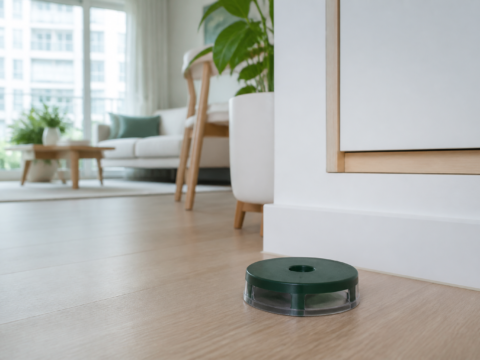
Bed Bug Traps & Interceptors: Do They Work?
If you suspect bed bugs in your HDB flat or condo, a bed bug trap or interceptor can be a smart tool — but mainly for *detection*, not for wiping out an infestation. Understanding what these devices do well, and where they fall short, saves you money and false hope. Here’s an honest Singapore guide to bed bug traps and interceptors, how to use them, and what they can’t replace.
What a bed bug trap is
A bed bug trap is a device designed to catch bed bugs as they move around your bed or furniture. There are two main types:
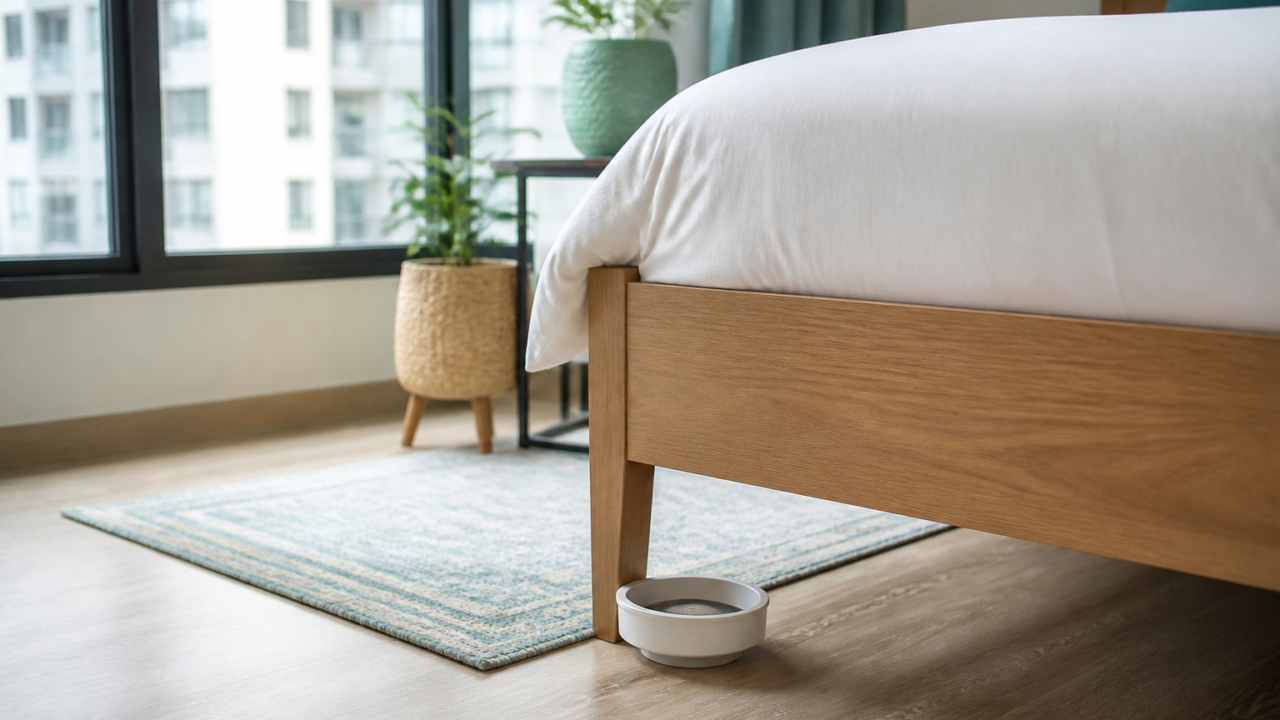
- Interceptors — shallow plastic cups placed under each bed or sofa leg. Bed bugs trying to climb up (or down) fall into a slippery well and can’t escape.
- Active traps — devices that lure bed bugs using heat, CO2 or a chemical attractant, mimicking a sleeping human.
Both let you *see* whether bed bugs are present and roughly how active they are — invaluable when the bugs themselves are hard to spot.
Do bed bug traps and interceptors actually work?
For monitoring: yes, genuinely useful. For elimination: no, not on their own.
What a bed bug trap does well:
- Confirms whether you have bed bugs at all.
- Catches bugs travelling between hiding spots and your bed.
- Helps gauge whether numbers are rising or falling during treatment.
- Adds a protective barrier when combined with an isolated bed.
Where it falls short:
- It won’t catch bugs already living *in* your mattress or headboard.
- It does nothing about eggs hidden in seams and cracks.
- A breeding population produces far more bugs than any trap can catch.
So traps are a thermometer, not a cure. They tell you what’s happening and reduce some movement — but the colony keeps breeding unless you treat it.
How to use interceptors for monitoring and protection
Interceptors are the most practical bed bug trap for home use. To get the most from them:
- Place one under each leg of the bed and any nearby sofa.
- Pull the bed away from the wall so bugs can’t bypass the cups.
- Keep bedding from touching the floor — no skirts or sheets draping down.
- Check the cups every few days and note what’s caught.
- Combine with mattress encasements to seal in any bugs already inside.
Done together, this isolates your bed: bugs can’t climb up to feed, and any caught in the interceptors confirm ongoing activity. For a full inspection routine, see how to check for bed bugs.
Interceptors are also useful *after* treatment. Keep them in place for several weeks once a professional has treated your home — if the cups stay empty, that’s a strong sign the infestation is under control. If bugs keep appearing, you know the problem isn’t finished and follow-up is needed. This makes interceptors a low-cost early-warning system as well as a barrier.
Active traps that use heat or CO2 can help confirm a problem in a room where you’re unsure, but they’re more expensive and still won’t clear an infestation. For most Singapore homes, simple interceptors give the best value for monitoring.
Traps vs. real treatment
Here’s how a bed bug trap compares to what actually clears an infestation.
| Method | Catches bugs | Kills eggs | Clears infestation |
|---|---|---|---|
| Interceptors | Some (travelling bugs) | No | No |
| Active traps | Some (lured bugs) | No | No |
| Heat treatment | Yes (all stages) | Yes | Yes |
| Professional treatment | Yes | Yes | Yes |
Traps support a plan; they don’t replace treatment. Eggs are the key gap — they hatch days after the adults are dealt with, restarting the cycle. Our guide to bed bug eggs explains why.
When to call a professional
Use traps to detect and monitor, but bring in help once you’ve confirmed an active infestation — bed bugs are among the hardest pests to clear alone, and in dense Singapore housing they spread between units.
Call a professional when:
- Interceptors keep catching bugs week after week.
- You find live bugs, eggs or droppings in seams.
- Bites continue despite your own efforts.
Licensed technicians combine targeted treatment with heat and scheduled follow-up visits to cover the egg-hatch window — the part traps and DIY can’t manage. Learn more about professional bed bug treatment in Singapore.
DIY interceptors vs. shop-bought
You don’t always have to buy interceptors. A clean, smooth-sided plastic or glass container with a little talcum powder rubbed inside the well works on the same principle — bed bugs climb in but can’t climb the slippery sides. Shop-bought interceptors are simply more durable, have a textured outer lip the bugs can grip on the way up, and sit neatly under a bed leg. Either way, the value is in monitoring. For how we handle product recommendations, see our affiliate disclosure.
When traps are most useful
Interceptors and traps earn their keep at three moments:
- Early suspicion. If you have bites but haven’t seen a bug, traps help confirm whether bed bugs are really the cause — see bites but no signs of bed bugs and early signs of bed bugs.
- During treatment. They show whether numbers are falling.
- After treatment. Empty cups over several weeks are reassurance the job worked.
What they can’t replace is the treatment itself — for that, see how to get rid of bed bugs and best bed bug spray in Singapore.
Frequently asked questions
Do bed bug interceptors really work?
How long should I leave interceptors in place?
Are active (CO2/heat) traps worth it?
Related guides
- How to check for bed bugs
- Bed bug eggs: what they look like
- How to get rid of bed bugs
- How to prevent bed bugs
- Best bed bug spray in Singapore
A bed bug trap is excellent for catching the problem early and tracking progress — just pair it with proper treatment to actually end the infestation.
*Traps confirming bed bugs are still active? Get a free quote for professional bed bug treatment in Singapore today.*