Bites But No Signs of Bed Bugs? Here’s What’s Going On

It’s a frustrating and worrying situation: you’re waking up with itchy bites, but a careful search turns up nothing. If you have no signs of bed bugs but you have bites, you’re not imagining it, and bed bugs are only one of several possible explanations. Here’s what could be going on and how to confirm the real cause in your Singapore home.
First, what counts as “signs” of bed bugs
Before assuming bed bugs are absent, make sure you’ve checked properly. The signs go beyond seeing a live bug:
- Tiny dark droppings in mattress seams and on the frame
- Small blood spots on sheets
- Shed skins (pale, empty shells) in crevices
- Pale, rice-shaped eggs in seams and joints
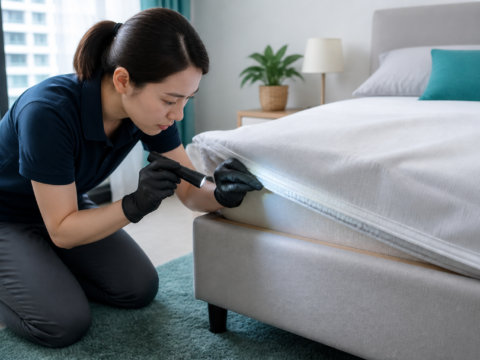
Bed bugs are expert hiders, especially early on, when there may be very few of them. Our guide on how to check for bed bugs shows the exact spots people often miss, like behind the headboard and inside frame joints. It’s worth a second, slow inspection with a torch before ruling them out.
Likely causes when there are no signs of bed bugs
If a thorough check still finds nothing, consider these common alternatives:
1. Mosquitoes
Singapore’s climate keeps mosquitoes active year-round. Mosquito bites are scattered rather than in lines, can appear on any exposed skin, and often itch immediately. You may also notice mosquitoes around dawn and dusk. See our comparison of bed bug bites vs mosquito bites to check.
2. Other biting insects
- Fleas, especially if you have pets, tend to bite the lower legs and ankles in clusters.
- Mites or midges can cause bites that are hard to trace.
- Ants or spiders occasionally bite, usually as one-off marks.
3. Non-bite skin reactions
Not every itchy bump is a bite. Possible causes include:
- Heat rash, common in Singapore’s humidity
- Allergic reactions to detergents, fabrics or food
- Dry or sensitive skin and eczema
- Hives from various triggers
These can look remarkably like bites and appear overnight, which adds to the confusion.
4. Very early or low-level bed bug activity
Sometimes bites genuinely are bed bugs, but the population is so small that signs are hard to find. A single bug or a new introduction may bite before leaving obvious traces. This is also why people react differently: some show bites long before the infestation is large enough to spot easily.
How to narrow it down
Work through this checklist to identify the cause:
| Clue | Points toward |
|---|---|
| Bites in lines/clusters, appear overnight, on areas touching the bed | Bed bugs |
| Scattered bites, any time, mosquitoes seen | Mosquitoes |
| Bites on ankles/lower legs, pets at home | Fleas |
| No clear pattern, recent new detergent or fabric | Skin reaction |
| Bites stop when sleeping elsewhere | Something in the bedroom |
A useful test: if bites continue while you sleep in a different room or bed, the cause is likely on your body or environmental (skin reaction, mosquitoes) rather than your mattress.
When to take action
- If you suspect mosquitoes, focus on removing standing water and screening windows. Our window insect screens keep them out while letting air flow.
- If you suspect a skin reaction, change detergents, manage humidity, and see a doctor if it persists. This is general guidance only.
- If bed bugs remain a real possibility, get a professional inspection. Their ability to confirm a low-level infestation that DIY checks miss is exactly where they add value.
When to call a professional
Call for a professional bed bug inspection if:
- Bites keep recurring with no clear alternative cause
- You find any physical evidence, even a little
- You’ve ruled out mosquitoes and skin reactions
A trained technician can confirm whether bed bugs are present even at very low numbers, saving you from treating the wrong problem. Our bed bug treatment in Singapore starts with a proper inspection so you know for sure.
The bottom line
Having bites but no signs of bed bugs usually means one of three things: the bed bugs are hiding well, something else is biting you, or it isn’t a bite at all. Check carefully, rule out mosquitoes and skin reactions, and get a professional inspection if doubt remains.
A simple process of elimination
When the cause isn’t obvious, a methodical approach beats guessing. Try working through it in this order:
- Re-check the bed thoroughly with a torch. Most “no signs” cases are actually missed signs in seams, behind the headboard or in frame joints. Our how to check for bed bugs guide shows the spots people overlook.
- Account for pets. If you have a cat or dog, fleas climb the suspect list quickly. See flea bites on humans.
- Consider mites. Bird mites, dust mites and other tiny mites can bite or irritate skin; mite bites: identification and treatment helps you tell.
- Test your environment. Sleep elsewhere for a few nights. If bites stop, the source is in the bedroom; if they continue, it’s more likely on your body or environmental.
This narrows the field fast and tells you whether to keep hunting for bed bugs or look elsewhere.
Frequently asked questions
Can stress or anxiety cause itching that feels like bites?
Why do bites only appear on some mornings?
Should I bug-bomb the room just in case?
Could it be something I’m reacting to, not a bite at all?
Related guides
- How to check for bed bugs
- Flea bites on humans
- Mite bites: identification and treatment
- How to identify bug bites
- What do bed bug bites look like
*Bites with no clear cause? Get a free quote from Insect Out and we’ll help you find the source.*