How to Get Rid of Scale Insects on Plants (Singapore)
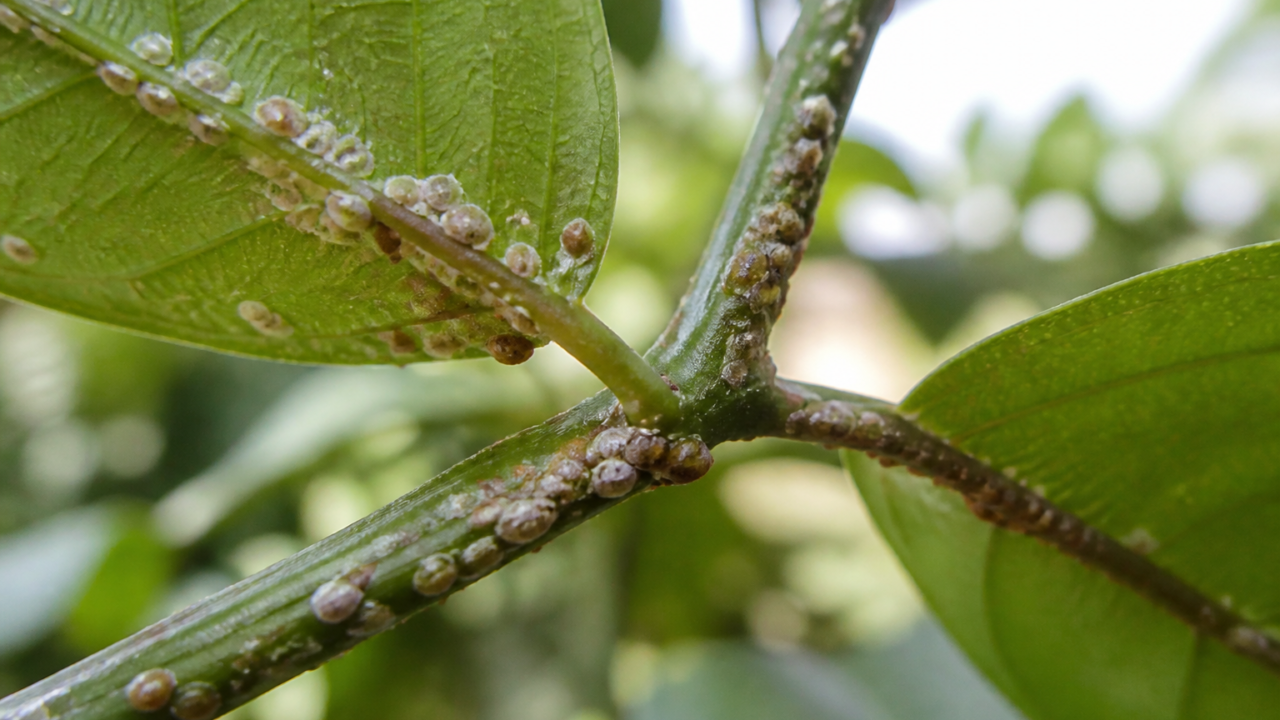
If the stems or leaves of your plants are dotted with small, immovable bumps, you may have a scale insect problem. These sap-sucking pests are common on Singapore garden and indoor plants, and left alone they weaken growth and invite sooty mould. This guide explains how to identify a scale insect and how to clear it using an organic-first approach.
What is a scale insect?
A scale insect is a small sap-feeding pest that attaches itself to stems, leaf undersides and the joints of plants. Adults often look less like insects and more like tiny shells, scabs or waxy bumps, which is why they’re easy to miss.
There are two broad groups:
- Armoured scale — hard, flat bumps that don’t move.
- Soft scale — softer, often producing sticky honeydew.
Both drain sap from the plant, sapping its energy over time.
Signs of a scale insect problem
Look for these symptoms:
- Small bumps on stems and along leaf veins that don’t brush off easily.
- Sticky residue (honeydew) on leaves or surfaces below the plant.
- Sooty black mould growing on the honeydew.
- Ants patrolling the plant — they farm scale for honeydew.
- Yellowing leaves, leaf drop or stunted growth.
In Singapore’s warm climate, scale can reproduce year-round, so populations build steadily if untreated. Common hosts include hibiscus, citrus, ornamental shrubs and many houseplants.
Organic-first ways to get rid of scale insects
Start with the gentlest methods — they’re safer for you, pets and beneficial insects:
- Manual removal. For light infestations, scrape scale off with a fingernail, soft toothbrush, or a cotton bud dipped in diluted rubbing alcohol. Wipe stems and leaf undersides thoroughly.
- Prune heavily infested parts. Cut off and bag badly affected stems or leaves rather than trying to save them.
- Horticultural oil. A light horticultural oil coats and smothers scale. Apply to affected areas, including leaf undersides, following the product’s dilution instructions.
- Neem oil. Neem disrupts scale and also deters re-infestation. Spray in the cooler part of the day and repeat as directed.
- Insecticidal soap. A soft soap spray helps with soft scale and crawlers (the mobile young).
Repeat treatments every week or two, because eggs and crawlers hatch in waves and a single application rarely clears them all.
Don’t forget the ants
Ants protect scale insects in exchange for honeydew, so they can undo your efforts. If you see a steady ant trail to an infested plant, manage the ants too — a sticky barrier around pots or stems helps, and persistent indoor ant problems may need professional ant control in Singapore.
Preventing scale insects coming back
- Inspect new plants before bringing them home or indoors.
- Quarantine new additions for a couple of weeks.
- Wipe down leaves regularly so you catch early bumps.
- Avoid over-fertilising — lush, soft new growth attracts sap-feeders.
- Keep plants healthy and not overcrowded so air circulates.
Healthy, well-spaced plants resist and recover from scale far better than stressed ones.
When to get help
Most scale infestations on home plants can be managed organically with patience. Consider professional help if:
- Scale spreads across many plants despite repeated treatment.
- A valued tree or large planting is heavily affected.
- Scale is part of a wider pest issue in your garden or balcony.
For stubborn outdoor infestations or mixed pest problems, professional pest control in Singapore can assess and treat the situation. Scale is just one of many sap-feeders to watch for — see our overview of common garden pests in Singapore to recognise the others early.
Scale insects vs mealybugs and other lookalikes
Scale is easy to confuse with related sap-feeders, and the treatment overlaps:
- Mealybugs look like small white, cottony tufts in leaf joints; they move slowly and also produce honeydew.
- Aphids are soft, pear-shaped and cluster on new growth.
- Whiteflies flutter up in a cloud when you disturb a plant.
The good news is that the organic-first toolkit — horticultural oil, neem, insecticidal soap and manual removal — works against most of these soft-bodied pests. Treat the whole plant, including leaf undersides, and repeat over several weeks to catch newly hatched young, since one application rarely clears an established population in Singapore’s year-round breeding conditions.
If your plant also shows chewed leaves, holes or other damage alongside the bumps, more than one pest may be present, so inspect carefully before deciding on treatment.
Understanding the crawler stage
The key to clearing scale is understanding its life cycle. Adult scale are protected under a hard or waxy shell, which is why sprays alone often disappoint — the covering shields them. The vulnerable stage is the crawler: newly hatched young that move about the plant before settling and forming their own shell. Crawlers are tiny and easily missed, but they’re when treatments like horticultural oil and insecticidal soap work best. This is why timing and repetition matter more than strength: spraying once kills the crawlers out at that moment, but eggs keep hatching in waves. Treating every 7 to 14 days for several rounds catches successive batches of crawlers before they can mature and breed, which is what finally breaks the cycle in Singapore’s year-round growing conditions.
Balcony and HDB-specific tips
Many Singapore plant lovers garden on a balcony, corridor or window ledge, where conditions differ from an open garden. Plants packed closely on a balcony let scale crawl easily from pot to pot, so space your containers and inspect new arrivals before they join the collection. Hibiscus, lime and curry-leaf plants — all popular in HDB corridors — are frequent hosts, so check them often. Wiping leaves during your usual watering routine doubles as an early-warning inspection. For a broader view of what else troubles potted gardens here, see our guide to balcony garden pest control in Singapore.
Frequently asked questions
Why do my treatments keep failing?
Are scale insects harmful to humans or pets?
Should I throw out a badly infested plant?
Does sooty mould need separate treatment?
Related guides
- Common garden pests in Singapore
- How to get rid of mealybugs
- How to get rid of aphids on plants
- How to get rid of whiteflies on plants
- Balcony garden pest control in Singapore
*Battling scale across your garden or balcony? Get a free quote from Insect Out.*