How to Get Rid of Aphids on Plants (Singapore)
Aphids are tiny sap-sucking insects that multiply quickly in Singapore’s warm, humid climate, and they can stunt or distort a healthy plant within days. If your leaves are curling, yellowing or coated in sticky residue, you likely have an aphid problem. This guide explains how to get rid of aphids on garden and balcony plants safely, using methods that work for HDB corridors, condo balconies and landed gardens alike.
How to Spot Aphids on Your Plants
Aphids are usually 1–3mm long and come in green, black, brown, yellow or even pinkish shades. They cluster on the undersides of leaves and on soft new growth and flower buds.
Common signs include:
- Curled, distorted or yellowing leaves
- A shiny, sticky coating (called honeydew) on leaves or the floor below
- Black sooty mould growing on that sticky residue
- Ants marching up and down the stems — ants farm aphids for their honeydew
- Clusters of tiny insects on new shoots
If you see ants on a plant in Singapore, check the leaves; they are often a clue that aphids are present.
How to Get Rid of Aphids: Step by Step
You don’t need strong pesticides for most aphid outbreaks. Start with the gentlest method and escalate only if needed.
- Blast them off with water. A firm spray from a hose or spray bottle dislodges most aphids. Aim at the undersides of leaves. Repeat every few days.
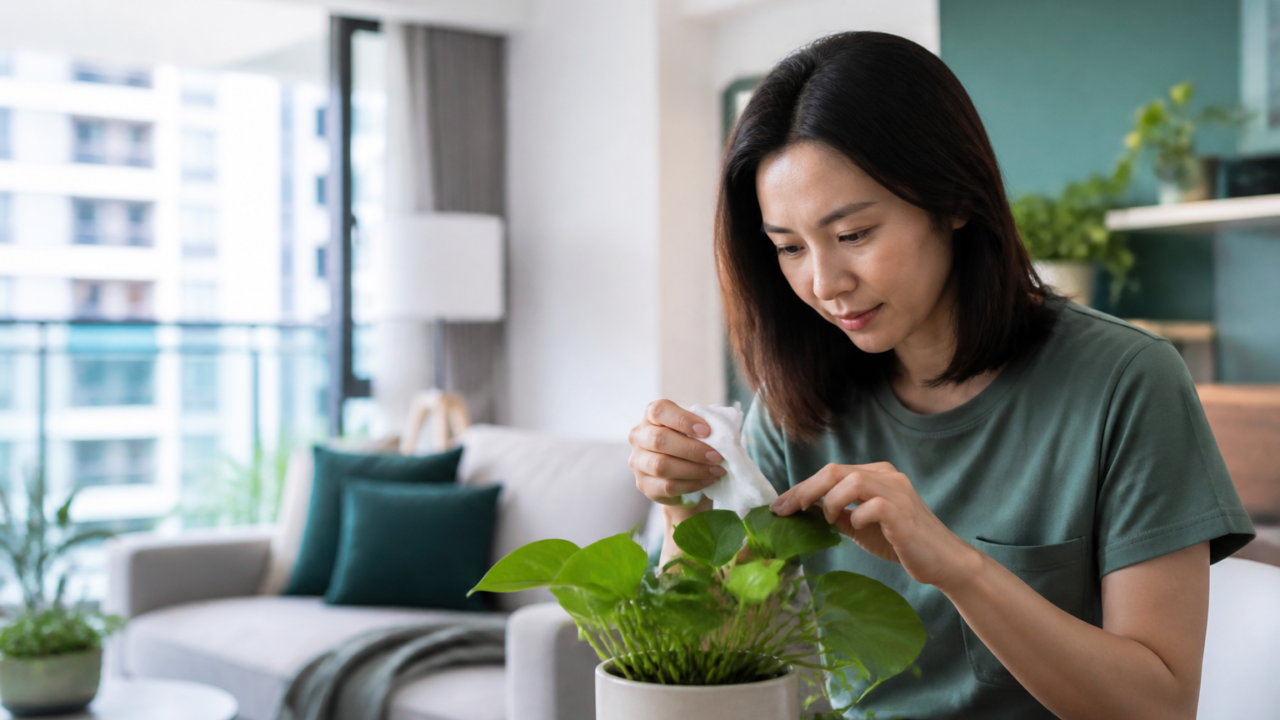
- Wipe by hand. For small balcony plants, wipe leaves with a damp cloth or your fingers (wear gloves if squeamish).
- Use a soap spray. Mix a few drops of mild dish soap into a litre of water and spray affected areas. The soap breaks down the aphids’ protective coating. Spray in the early morning or evening, never under hot midday sun.
- Try neem oil. Neem, available at most Singapore nurseries, disrupts aphid feeding and breeding. Dilute per the label and apply to leaf undersides.
- Prune heavily infested shoots. Cut off and bag badly affected tips rather than trying to save them.
Always test any spray on a few leaves first and wait a day to check for leaf burn.
Natural Predators That Help
Singapore gardens host helpful insects that eat aphids for you. Ladybirds (ladybugs) and their larvae, hoverfly larvae and lacewings are all natural aphid predators. Avoid blanket spraying with insecticide, as it kills these allies too. A balcony with a mix of flowering plants tends to attract more of these beneficial insects.
Stop Aphids Coming Back
Prevention is easier than control once an outbreak starts.
- Don’t over-fertilise. Too much nitrogen produces soft, sappy growth that aphids love.
- Inspect new plants before bringing them home from the nursery — aphids hitchhike in.
- Control ants, since they protect aphid colonies. Keep ants off pots and railings.
- Space plants so air circulates; crowded, shaded plants are more prone to infestation.
- Check weekly, especially the soft new growth and leaf undersides.
For a broader look at what attacks Singapore plants, see our guide to common garden pests in Singapore.
When to Get Professional Help
Aphids on a few balcony pots are a DIY job. But if you have a larger landed garden, repeated infestations across many plants, or a related pest issue like a heavy ant trail or whitefly outbreak, it can be worth bringing in help. A professional can identify exactly what you’re dealing with and treat it without harming surrounding plants.
If pests keep spreading from your garden into your home, our team can advise on integrated pest control in Singapore that covers both the outdoor source and indoor entry points.
A Note on Balcony and Indoor Plants
For condo balconies, aphids can blow in or arrive on new plants and spread fast in the still, sheltered air. Keep balcony plants spaced out and inspect them regularly. If you grow herbs or edibles, stick to water sprays, hand-wiping and soap solutions rather than chemical pesticides, and rinse anything you plan to eat.
Catching aphids early is the real secret — a five-minute weekly check beats a week of treatment.
Common Mistakes When Treating Aphids
Most aphid problems that drag on for weeks come down to a handful of avoidable errors:
- Treating once and stopping. Aphids reproduce extremely fast, often without mating, so survivors and newly hatched young rebuild the colony within days. Repeat every few days until the plant stays clean.
- Mixing soap too strong. A heavy soap dose burns leaves more than it helps. A few drops per litre is plenty — more is not better.
- Spraying only the tops of leaves. Aphids cluster on the undersides and on soft new tips, so a top-down spray misses most of them. Tilt pots and aim upward.
- Blanket-spraying the whole balcony. This wipes out ladybirds, hoverflies and lacewings that would otherwise do the work for you, and can leave you more dependent on sprays long term.
- Ignoring the ants. While ants keep farming and protecting aphids, your treatment is working against a constant resupply.
Aphids on Herbs and Edibles
Many Singapore balcony gardeners grow chilli, basil, mint, curry leaf and kangkong, and aphids love this soft, well-watered growth. On anything you plan to eat, skip chemical pesticides entirely. Stick to firm water sprays, hand-wiping and a mild soap solution, and always rinse harvested leaves well before cooking. Because edibles are picked often, a quick inspection each time you harvest doubles as pest control — you will usually spot a cluster long before it spreads.
Frequently Asked Questions
Are aphids harmful to humans or pets?
Do aphids mean my garden is dirty?
Will aphids come indoors?
Is neem oil safe to use often?
Related guides
- How to get rid of whiteflies on plants
- How to get rid of spider mites on plants
- How to get rid of mealybugs
- Scale insects on plants
- Balcony garden pest control in Singapore
- Natural insecticides for the home
*Struggling with pests that keep returning to your garden or balcony? Get a free quote for pest control and we’ll help you sort it out.*