How to Get Rid of Spider Mites on Plants (Singapore)
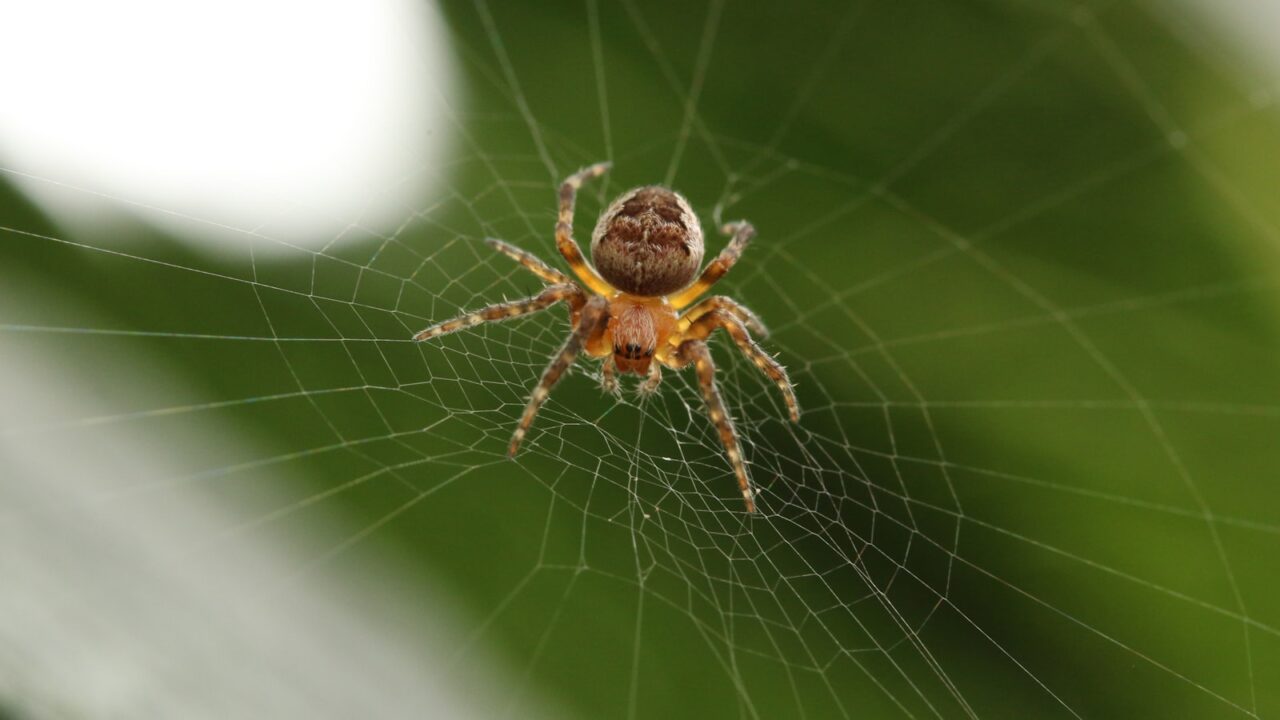
If the leaves on your houseplant or balcony shrub look dusty, speckled and faded, and there are fine webs in the leaf joints, you almost certainly have spider mites. These tiny pests are barely visible but multiply astonishingly fast in Singapore’s warm, dry indoor air. Here’s how to confirm them and clear spider mites before they kill a plant.
What spider mites are
Spider mites are not insects — they’re tiny arachnids, often less than 0.5mm across, that live in colonies on the undersides of leaves. They pierce plant cells and suck out the contents, leaving the pale stippling that gives infested leaves a speckled, washed-out look.
They’re called spider mites because heavy infestations spin fine silk webbing across leaves and stems. By the time you see webbing, the colony is already large.
Why they thrive in Singapore homes
Counter-intuitively, spider mites do best in warm, dusty, low-humidity spots — exactly the conditions created by air-conditioned condos and HDB living rooms. Plants sitting near an aircon vent, on a hot windowsill, or in a stuffy corner are most at risk.
Common targets include:
- Indoor foliage plants (calathea, palms, ferns, ivy)
- Balcony chilli, beans and tomato
- Roses, hibiscus and ornamental shrubs
How to tell spider mites apart
Spider mites are easy to confuse with other problems. Use these checks:
- Speckled, stippled leaves that fade to yellow or bronze
- Fine webbing in leaf axils and across new growth
- Tiny moving dots on the leaf underside — tap a leaf over white paper and watch for crawling specks
- Leaves drying out and dropping in bad cases
If you see flying white insects instead, that’s whiteflies; if you see clusters of soft green or black bugs, that’s aphids.
How to get rid of spider mites
Start gentle and stay consistent — spider mites breed in days, so one spray is never enough.
- Isolate the plant. Move it away from your other plants so the mites don’t spread.
- Rinse thoroughly. Take the plant to the shower or balcony tap and wash both sides of every leaf with a firm spray of water. This alone knocks numbers down hard.
- Raise the humidity. Mites hate moisture. Misting, grouping plants and keeping them away from aircon vents makes the environment far less friendly.
- Insecticidal soap. Spray both leaf surfaces thoroughly. Soap kills on contact, so coverage is everything. Repeat every 4–5 days.
- Neem oil. Diluted neem (with a drop of mild soap as emulsifier) sprayed in the cooler evening disrupts feeding and breeding over a few weeks.
- Wipe smooth-leaved plants with a damp cloth to remove mites, eggs and webbing physically.
Repeat your chosen treatment every few days for at least two to three weeks to catch newly hatched mites and break the cycle.
A simple treatment plan
| Day | Action |
|---|---|
| 1 | Isolate + rinse all leaves |
| 2–3 | Apply soap or neem spray, both leaf sides |
| 5–7 | Rinse again, re-spray |
| Weekly | Repeat for 3 weeks, raise humidity |
Stop spider mites coming back
Prevention is mostly about conditions:
- Keep humidity up and move plants away from direct aircon airflow.
- Dust leaves regularly — dusty foliage is a spider-mite magnet.
- Quarantine new plants for a week or two before placing them with others.
- Don’t let plants get drought-stressed; stressed plants are far more vulnerable.
- Inspect weekly, checking leaf undersides where colonies start.
Common mistakes that let spider mites win
Spider mites are one of the hardest plant pests to fully clear, mostly because of a few avoidable errors:
- Spraying once and assuming it’s done. Mites complete a generation in about a week in warm conditions, and eggs are unaffected by most contact sprays. One treatment leaves the next wave to hatch.
- Forgetting the leaf undersides. Colonies live on the underside, so a top-only spray barely touches them. Turn every leaf.
- Leaving the plant by the aircon. Dry, still, warm air is exactly what mites love. Until the infestation is gone, move the plant somewhere more humid.
- Not isolating the plant. Mites walk and drift on the faintest air current to neighbouring pots. An untreated plant nearby keeps reseeding the problem.
- Reaching for a broad chemical first. Many general insecticides kill the predatory mites that would otherwise help you, and spider mites can rebound faster than their predators afterwards.
The Singapore aircon angle
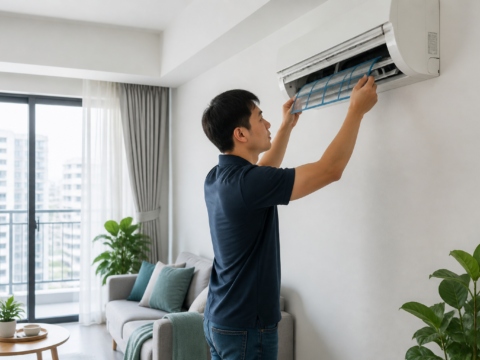
Most indoor spider-mite outbreaks here trace back to air-conditioning. A constantly running aircon strips humidity from the air and coats leaves in fine dust, creating the warm, dry, dusty microclimate mites thrive in. If you keep foliage plants in an air-conditioned condo or HDB living room, group them together on a pebble tray with a little water, mist regularly, wipe the leaves clean, and keep them out of the direct airflow. Plants on a hot, dusty windowsill behind glass face the same risk. Managing that microclimate does more to prevent recurrence than any single spray. For a wider view of what else attacks balcony and indoor plants, our overview of balcony garden pest control in Singapore is a useful companion.
When to escalate
Most spider-mite outbreaks on a few plants can be beaten with patience and the methods above. But if mites keep returning across many plants, or you’re dealing with a wider pest problem indoors, it’s worth getting expert help.
Our guide to common garden pests in Singapore helps you identify what else might be feeding on your plants, and for stubborn or widespread infestations, professional pest control in Singapore can assess and treat the issue.
Frequently asked questions
Do spider mites bite people or infest the house?
Why do my spider mites keep coming back?
Is webbing always a sign of spider mites?
Are spider mites the same as whiteflies or thrips?
Related guides
- Common garden pests in Singapore
- How to get rid of whiteflies on plants
- How to get rid of thrips
- How to get rid of mealybugs
- Scale insects on plants
- How to get rid of aphids on plants
*Spider mites stripping your plants? Request a free pest-control quote and get them under control.*