How to Get Rid of Whiteflies on Plants (Singapore)
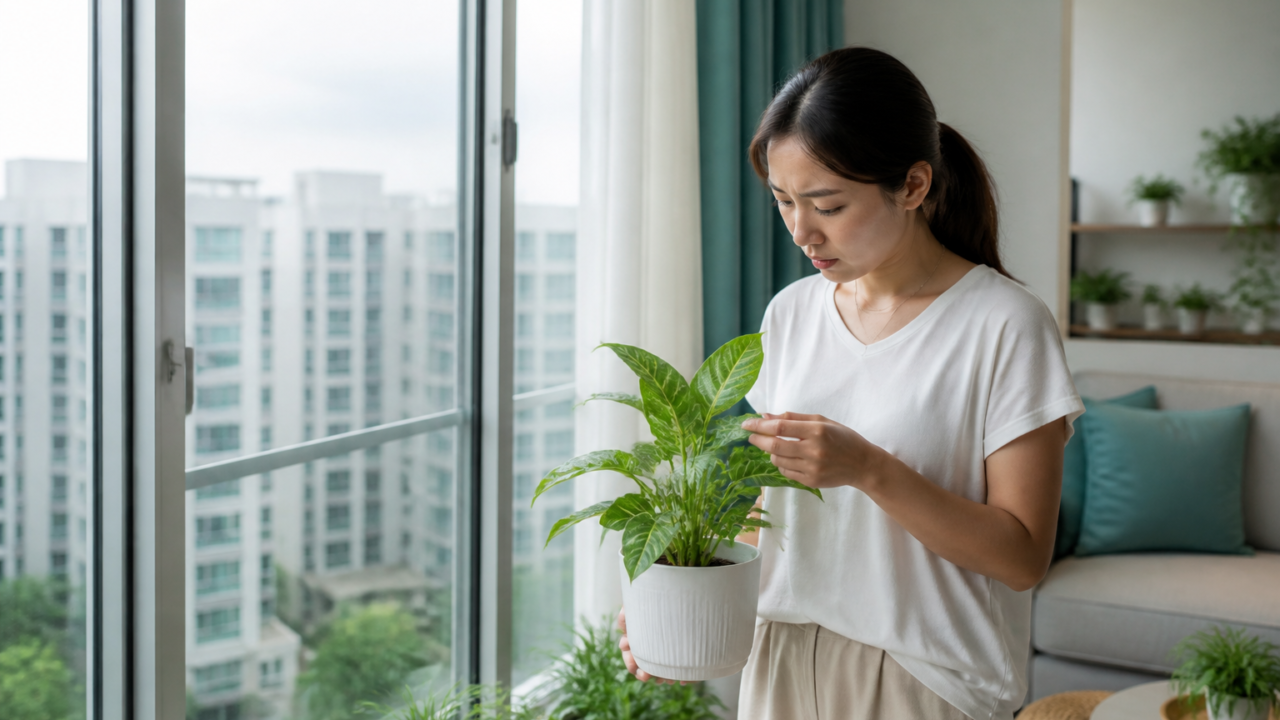
Brush against a chilli plant or hibiscus on your balcony and a cloud of tiny white insects lifts off the leaves — those are whiteflies. They suck sap, weaken plants, and leave behind a sticky mess that turns into black mould. If you want to know how to get rid of whiteflies before they take over your Singapore garden, the good news is that most cases respond well to simple, organic methods.
What whiteflies are (and why they thrive here)
Whiteflies are not true flies — they are sap-sucking insects related to aphids and scale. The adults are about 1–2mm long, white, and powdery-looking, and they flutter up when disturbed. Their eggs and translucent young (nymphs) sit on the undersides of leaves, which is why they are easy to miss until numbers explode.
Singapore’s warm, humid climate lets them breed year-round with no winter to slow them down. They love soft new growth on common balcony plants:
- Chilli, tomato and brinjal (eggplant)
- Hibiscus, gardenia and ornamental shrubs
- Curry leaf, basil and other herbs
Signs you have whiteflies
Catch them early and control is far easier. Look for:
- A cloud of small white insects when you shake a plant
- Yellowing, curling or speckled leaves
- Honeydew — a sticky coating on leaves or the floor below
- Sooty mould — black, soot-like film growing on the honeydew
- Ants farming the plant (they feed on the honeydew)
Stunted growth and dropping leaves point to a heavier infestation that needs prompt action.
How to get rid of whiteflies: organic first
Start with the gentlest methods. They are safe around herbs, edibles, pets and balcony neighbours.
- Blast them off. Spray leaves — especially the undersides — with a firm jet of water in the early morning. This dislodges adults, nymphs and eggs. Repeat every few days.
- Insecticidal soap or a DIY soap spray. Mix a few drops of mild liquid soap (not detergent) in a litre of water and spray thoroughly, top and bottom of every leaf. Soap only works on contact, so coverage matters. Test on one leaf first and avoid spraying in harsh midday sun.
- Neem oil. Dilute horticultural neem per the label, add a drop of soap as an emulsifier, and spray in the cooler evening. Neem disrupts feeding and breeding and is one of the most reliable tools for how to get rid of whiteflies over a few weeks.
- Yellow sticky traps. Whiteflies are drawn to yellow. Hang traps near affected plants to catch adults and to monitor whether numbers are dropping.
- Prune heavily infested leaves. Bag and bin them — don’t shake them out over other plants.
Be patient and consistent. Whiteflies breed in cycles, so you’ll need to repeat treatments every 4–7 days for two to three weeks to break the cycle.
Comparing the main treatments
| Method | Best for | How often |
|---|---|---|
| Water jet | Light infestations, daily knock-back | Every 2–3 days |
| Soap spray | Visible adults and nymphs | Every 4–5 days |
| Neem oil | Ongoing control, breaking the cycle | Every 5–7 days |
| Sticky traps | Monitoring + catching adults | Replace when full |
Fixing the conditions that invite them
Treatment alone won’t help if conditions keep favouring whiteflies.
- Don’t over-fertilise with nitrogen. Lush, soft growth is exactly what they target.
- Space your pots so air moves between plants — crowded balcony gardens trap humidity and pests.
- Inspect new plants before bringing them home from the nursery. New buys are the most common way infestations arrive.
- Encourage natural predators like ladybirds and lacewings by avoiding broad-spectrum chemical sprays that kill them too.
- Check regularly — a quick look under leaves once a week catches problems while they’re small.
Common mistakes that let whiteflies bounce back
Plenty of balcony gardeners spray diligently and still lose ground. Usually it’s one of these slips:
- Treating only the tops of leaves. Eggs and nymphs live underneath, so a top-down spray misses the next generation entirely. Tilt pots and aim upward into the canopy.
- Stopping after one or two applications. Whiteflies overlap generations, so eggs you couldn’t reach hatch a few days later. You need to keep going for the full two-to-three-week cycle.
- Spraying in midday heat. Soap and neem can scorch leaves in direct Singapore sun. Treat in the early morning or cooler evening.
- Ignoring the ants. Ants protect whiteflies from predators in exchange for honeydew. If a trail is running up the stem, deal with it too — our guide to getting rid of ants in Singapore explains how.
- Bringing an untreated nursery plant straight into the collection. That single new pot reseeds everything around it.
The Singapore balcony angle
Most whitefly outbreaks here start on a crowded, sheltered balcony where pots are packed tight and air barely moves. The fix is partly horticultural: thin out the planting, raise pots off a damp floor, and give each plant breathing room so predators can patrol and sprays can reach every leaf. If your balcony doubles as a small kitchen garden, fold whitefly checks into a wider routine — our overview of balcony garden pest control in Singapore ties the sap-suckers, ants and caterpillars together so you’re not chasing each one separately.
When chemicals (and pros) make sense
If you’ve stayed consistent for a few weeks and the infestation keeps rebounding — or it has spread to many plants — a targeted horticultural insecticide may be needed. Choose a product labelled for whiteflies on your plant type, follow the safety instructions, and never spray edibles within the stated harvest interval. If you prefer to stay gentle, our rundown of natural insecticides for the home covers safer options first.
Whiteflies rarely move indoors, but if a plant problem is part of a wider issue with sap-suckers, ants or sooty mould around your home, our overview of common garden pests in Singapore helps you tell them apart. For persistent or large-scale infestations that DIY can’t shift, professional pest control in Singapore can treat the problem and advise on prevention.
Frequently asked questions
Do whiteflies bite people or come indoors?
Will whiteflies actually kill my plant?
Are whiteflies the same as fungus gnats?
Can I still eat herbs and chillies I’ve sprayed?
Related guides
- Common garden pests in Singapore
- How to get rid of spider mites on plants
- How to get rid of aphids on plants
- How to get rid of mealybugs
- Scale insects on plants
- How to get rid of thrips
*Whiteflies winning the battle on your balcony? Get a free pest-control quote and protect your plants.*