How to Get Rid of Pigeons (Singapore)
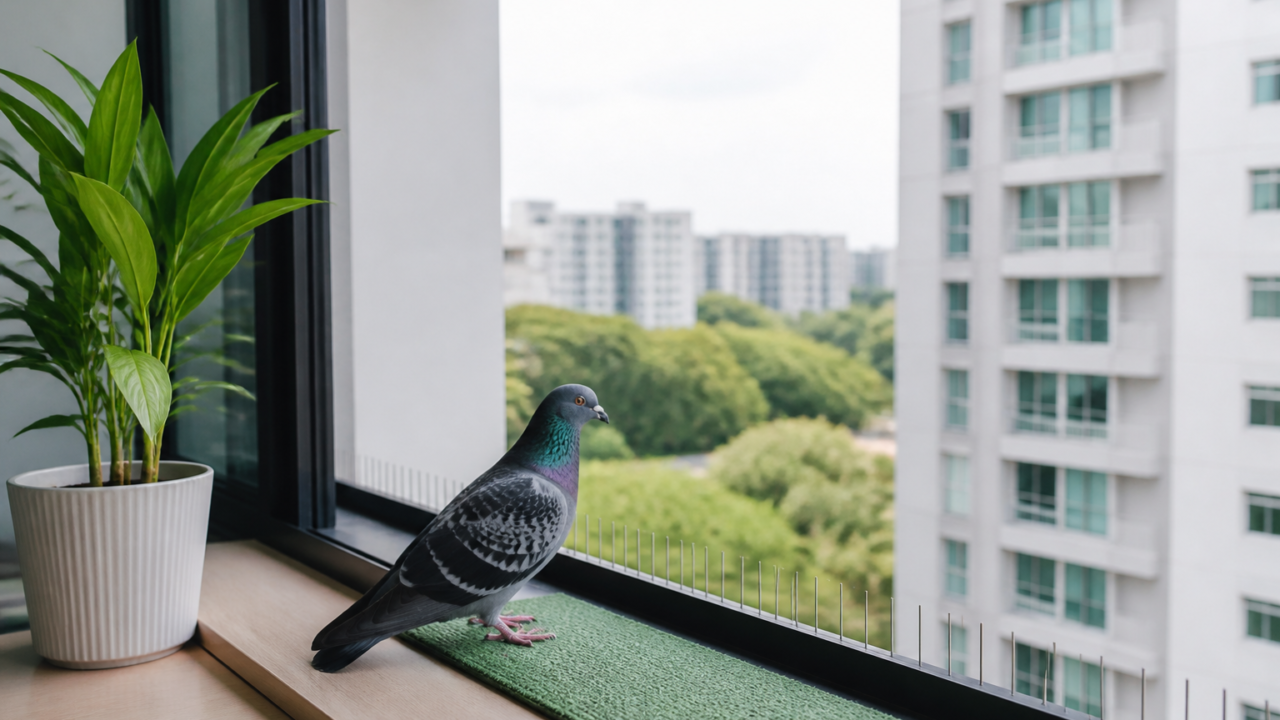
Pigeons on your ledge mean droppings, noise, feathers and mites — and once they decide your balcony is home, they’re stubborn. If you’re searching for how to get rid of pigeons in Singapore, the good news is that humane, legal deterrents work well when you act early and remove what’s attracting them in the first place.
Why pigeons pick your flat
Pigeons return to spots that offer food, shelter and a flat surface to perch or nest. Common magnets at HDB flats and condos include:
- Open or accessible food, including pet food on the balcony.
- Neighbours feeding birds (a frequent issue in older estates).
- Sheltered ledges, aircon compressor platforms and corridor parapets.
- Standing water on flat surfaces.
The first step is always to remove the attraction. No deterrent holds up if there’s a reliable food source nearby.
Start with cleaning and exclusion
Pigeons are drawn back by the smell of old droppings and nesting material. Clean affected surfaces thoroughly (wear a mask and gloves — droppings can carry pathogens) and clear any half-built nests *before* eggs appear.
Then block access:
- Bird netting across balconies, recesses and aircon ledges is the most reliable long-term fix.
- Anti-roosting spikes on narrow ledges and parapets stop perching without harming birds.
- Mesh or screens over openings keep birds out while letting air through.
Exclusion is humane and permanent because it removes the roosting spot entirely rather than relying on the bird losing interest.
Humane deterrents that help
Alongside exclusion, deterrents make a spot less appealing:
| Deterrent | How it works | Best for |
|---|---|---|
| Reflective tape / discs | Movement and glare unsettle birds | Balconies, ledges |
| Spikes | Removes flat perching surface | Parapets, narrow sills |
| Gel / slope strips | Surface feels unstable | Ledges |
| Decoy predators | Mimics a threat (move regularly) | Open areas |
Deterrents work best in combination and need maintenance — a decoy that never moves quickly stops fooling anyone.
What not to do
Stay on the right side of welfare and the law. Do not poison, trap or harm pigeons — this is both inhumane and can breach animal welfare rules. Avoid feeding birds, which in Singapore can also attract enforcement attention from the authorities. If a neighbour is feeding pigeons, raise it with your Town Council or condo management rather than tackling the birds yourself.
When to call bird control
If pigeons have already nested, droppings are heavy, or you’re dealing with a shared structure like a common corridor or facade, professional help is worth it. Specialists can:
- Install proper netting and spikes safely at height.
- Clean and decontaminate fouled areas, which also reduces bird mites.
- Advise on long-term proofing for your specific layout.
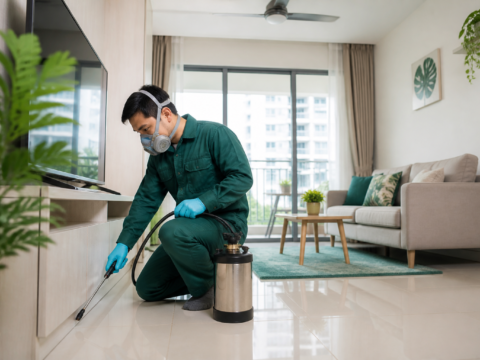
Bird droppings often come with bird mites that then move indoors, so treatment sometimes pairs with professional pest control to clear the secondary pests. For a broader look at options for flats and condos, see our guide to bird control for HDB and condos.
The health side you shouldn’t ignore
Pigeon droppings aren’t just unsightly. Dried droppings can release dust that’s a respiratory irritant, and accumulated mess attracts other pests. The bigger issue for many homes is bird mites — tiny parasites that live in nests and on the birds. When pigeons leave or a nest is disturbed, the mites go looking for a new host and can move indoors, where they bite people.
If you’re getting unexplained itchy bites near a window or balcony where pigeons have been, mites are a likely cause. Clearing the birds and the nesting material, then treating the affected area, deals with both problems at once.
Keeping them away for good
- Keep balconies and ledges clear of food, water and clutter.
- Re-check netting and spikes a few times a year.
- Clean droppings promptly so the scent doesn’t invite them back.
- Coordinate with neighbours — pigeons treat a whole block as one habitat.
Netting or spikes: which to choose
The two workhorses of pigeon-proofing solve different problems. Netting seals off an entire opening — a balcony, a recess, the gap beneath an aircon platform — so birds simply can’t get in; it’s the most complete fix but needs to be tensioned properly to look tidy and last. Spikes don’t enclose anything; they just remove the flat landing surface on a ledge, parapet or sill, so birds can’t settle. As a rough rule, net a *volume* you want birds kept out of, and spike a *line* you want them off. Our breakdown of bird spikes vs netting compares cost, looks and durability in more detail.
One more point on identification: not every grey bird on your ledge is a feral pigeon. If you’re not sure what you’re dealing with, how to tell doves and pigeons apart helps, and if mynas or crows are the real culprits, the deterrents differ slightly — see getting rid of mynas and crows.
Frequently asked questions
Is it legal to get rid of pigeons in Singapore?
There’s already a nest — what now?
Why am I getting bitten after the pigeons left?
Related guides
- Bird control for HDB flats and condos
- How to stop birds nesting on your aircon ledge
- Bird spikes vs netting
- How to remove a pigeon nest safely
- How to get rid of bird mites
Knowing how to get rid of pigeons is really about making your space unwelcoming and inaccessible, humanely. Act early, exclude properly, and most flats stay pigeon-free.
*Dealing with heavy fouling or bird mites after pigeons? Talk to us about pest control.*