Booklice in Singapore: What They Are & How to Get Rid of Them
Spotted tiny, pale, fast-moving specks on your walls, window frames, or the pages of an old book? In Singapore’s warm, humid climate, those are almost certainly booklice. They look alarming when they appear in numbers, but they’re more of a humidity warning sign than a health threat. Here’s exactly what booklice are, why they show up, and how to clear them.
What are booklice?
Booklice (also called psocids) are not true lice and don’t bite people or pets. They’re tiny insects, usually under 2mm, ranging from translucent white to pale brown. You’ll often only notice them because they move in clusters across a surface.
Despite the name, they’re not only found on books. They feed on microscopic mould and mildew, so they appear anywhere damp organic material grows. Common spots in a Singapore home include:
- Bookshelves, stored paper and cardboard boxes
- Window and door frames after rain
- Bathroom and kitchen corners
- Inside wardrobes and storerooms
- Around potted plants and stored dry food
Why booklice appear in Singapore homes
Singapore’s year-round humidity, often above 80%, is the single biggest reason booklice thrive here. They don’t actually eat your books or walls; they eat the mould that grows on them in damp conditions.
That makes booklice a useful signal. If you’re seeing them, somewhere in your flat is humid enough for mould to grow, even if you can’t see the mould yet. Newly renovated HDB units are a classic example, where fresh plaster, paint and trapped construction moisture create ideal conditions for a few months.
Poorly ventilated rooms, north-facing walls that stay cool and damp, and storerooms packed with cardboard all encourage them.
Are booklice harmful?
For most people, booklice are a nuisance, not a danger. They don’t bite, don’t spread disease, and won’t damage furniture structurally. The main concerns are:
- They can contaminate stored dry food (flour, cereal, pet food) in large numbers
- They can damage paper, old books and photographs over time
- Heavy populations may trigger mild allergy or asthma symptoms in sensitive people
If you have a baby, are storing important documents, or anyone in the home has respiratory sensitivities, it’s worth dealing with them promptly.
How to get rid of booklice
Because booklice depend on moisture and mould, the fix is mostly about drying things out, not spraying chemicals. Work through these steps:
- Lower the humidity. Run a dehumidifier or air-conditioning in affected rooms, aiming for around 50% relative humidity. This alone kills most booklice within days.
- Improve airflow. Open windows on dry days, keep wardrobes and storerooms ventilated, and avoid stuffing items tightly against walls.
- Remove the food source. Wipe down mouldy or damp surfaces with a mild detergent or diluted vinegar. Clean window frames and corners where condensation collects.
- Declutter storage. Discard or dry out damp cardboard boxes and old paper. Cardboard is both a food source and a hiding place.
- Protect dry food. Move flour, rice, cereal and pet food into airtight containers. Discard any packet that already shows clusters of booklice.
- Vacuum. Vacuum books, shelves and skirting to physically remove them, then empty the vacuum outside.
Severe or stubborn cases sometimes need targeted treatment alongside moisture control. If booklice keep returning after you’ve dried out the space, a professional can identify hidden damp or mould sources and treat them. See our pest control services in Singapore if the problem won’t go away.
How to prevent booklice from coming back
Prevention is straightforward once you understand they’re a moisture problem:
- Keep indoor humidity down with aircon or a dehumidifier, especially in bedrooms and storerooms
- Fix any leaks, seepage or condensation quickly
- Don’t store paper or cardboard in damp areas
- Ventilate enclosed spaces like bomb shelters and storerooms regularly
- Let new renovations and fresh paint dry out fully before storing items against the walls
If booklice are coming in from outside through gaps around windows, a fine mesh screen helps keep them and other small insects out while still letting air flow. Our window insect screens are a no-drill option suited to HDB and condo windows. For broader prevention, you may also find our guide on how to get rid of silverfish useful, since silverfish are drawn to the same damp conditions.
When to call a professional
DIY humidity control clears the vast majority of booklice problems. Consider professional help if:
- You see them spread across multiple rooms despite drying the space
- There’s visible mould you can’t fully remove
- They keep returning, suggesting a hidden leak or persistent damp source
A pest control technician can confirm whether it’s truly booklice and treat any underlying mould or pest issue at the source.
Booklice vs other tiny household bugs
Because booklice are so small, they’re easily confused with other pests that share Singapore’s damp corners. A few quick distinctions help you target the right fix:
- Booklice vs dust mites — dust mites are microscopic and invisible to the naked eye, so if you can actually see the speck moving, it’s not a dust mite. Both thrive in humidity, though, so the same drying-out approach helps with dust mites.
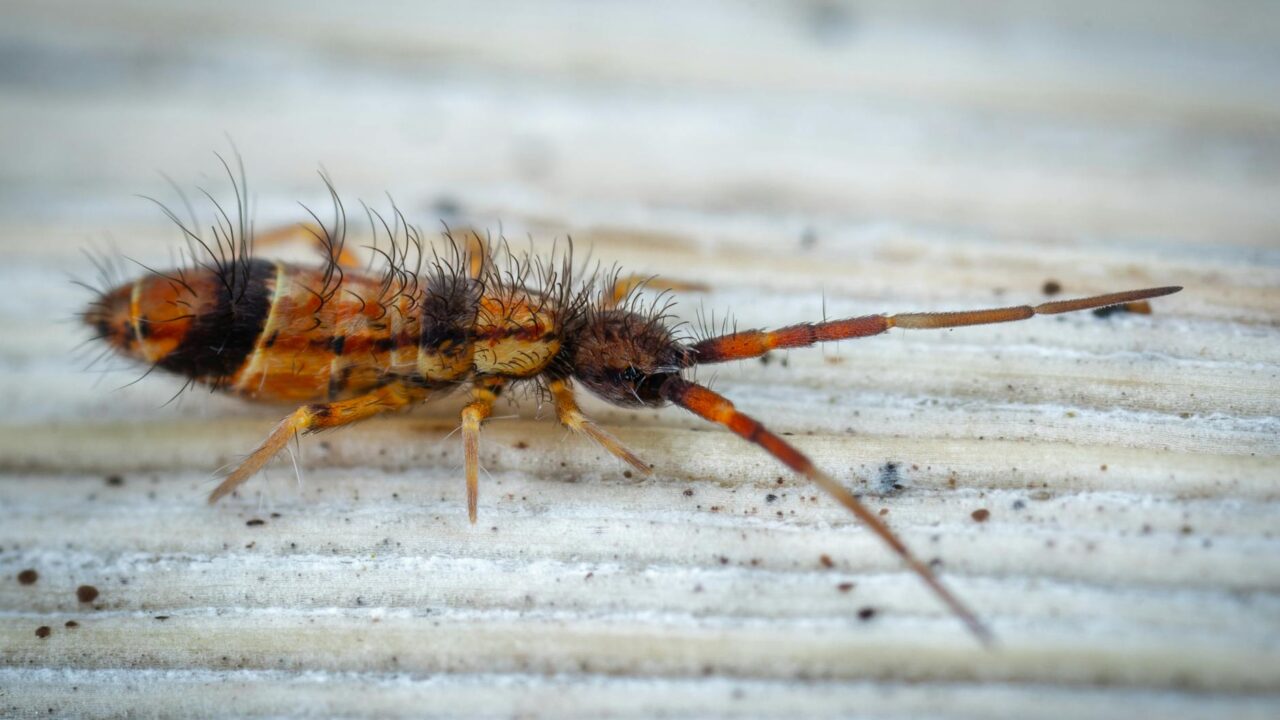
- Booklice vs springtails — springtails jump when disturbed and gather around damp soil and bathrooms, while booklice crawl. The remedy overlaps; see how to get rid of springtails.
- Booklice vs pantry pests — clusters in flour or cereal could be booklice or beetles. If the bugs are larger and darker, check our guide to grain and flour beetles in your pantry.
In every case the underlying lesson is the same: tiny bugs indoors almost always trace back to moisture or stored food, not dirt.
Frequently asked questions
Do booklice bite humans or pets?
Will booklice go away on their own?
Are booklice a sign my home is dirty?
Can insect screens stop booklice?
Related guides
- How to get rid of silverfish
- How to get rid of house centipedes
- How to get rid of springtails
- How to get rid of dust mites
- How to keep insects out of the house
*Still seeing booklice after drying things out? Contact Insect Out for a free quote and we’ll help you get to the root of the problem.*