Wood-Boring Beetles & Woodworm: Signs & Treatment (Singapore)

A wood borer is any beetle whose larvae tunnel through timber, and the damage they leave is often called woodworm. In Singapore’s warm, humid climate, these pests can quietly weaken furniture, parquet floors and structural timber long before you notice them. This guide explains the signs of a wood borer problem, how it differs from termites, and when DIY is enough versus when to call a professional.
What is a wood borer?
“Wood borer” is a general term for several beetle families whose grubs feed on wood. The adults lay eggs in cracks or pores of timber; the larvae bore inside and feed for months or years before chewing their way out as adults. Common types affecting homes include furniture beetles and powderpost beetles.
Because the destructive stage lives *inside* the wood, an infestation is usually well established by the time you see surface signs.
Signs of a wood borer infestation
Watch for these tell-tale clues:
- Round or oval exit holes in timber, typically 1–2mm wide, with clean edges.
- Frass — fine, powdery wood dust (like sawdust or talc) on or beneath furniture.
- Tunnels or galleries visible if you break open affected wood.
- Weak, crumbling or hollow-sounding timber.
- Occasionally, small beetles seen near windows or wooden items.
Frass and fresh-looking holes (pale, clean wood inside) suggest an *active* infestation. Old, grey holes with no powder may be from a problem that has already run its course.
Wood borer vs termites
People often confuse the two, but they are different pests with different treatments:
| Feature | Wood borer (woodworm) | Termites |
|---|---|---|
| Damage source | Beetle larvae | Social insect colony |
| Exit holes | Yes, round/oval | No (sealed mud tubes instead) |
| Frass | Powdery wood dust | Mud, soil, or pellets |
| Mud tubes | No | Yes (subterranean termites) |
| Spread | Item to item, slow | Whole-structure, can be fast |
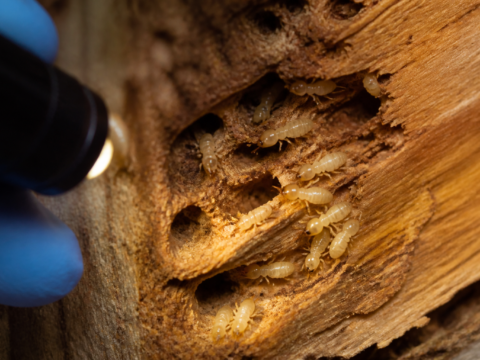
If you see mud tubes along walls or skirting, or hollowed timber without exit holes, you may be dealing with termites instead — see our guide to professional termite control in Singapore.
Why Singapore homes are at risk
Several local factors favour wood borers:
- High humidity keeps timber moisture levels attractive to beetles.
- Imported and second-hand furniture can arrive already infested.
- Untreated or older timber in renovations, antiques and parquet is vulnerable.
Air-conditioned, well-ventilated rooms with drier timber are less hospitable, which is one reason humidity control matters.
DIY: what you can and can’t do
For a small, isolated item — a single chair or a piece of decor — DIY may be enough:
- Isolate the item so beetles don’t spread to other furniture.
- Vacuum away frass, then check again in a few days to confirm fresh powder.
- Apply a proprietary wood borer treatment fluid following the label exactly.
- Reduce humidity in the room with ventilation or a dehumidifier.
- For small, removable wooden objects, some people freeze them to kill larvae.
DIY has real limits. It usually won’t reach larvae deep inside thick timber, and it can’t address an infestation spread across multiple items or built-in joinery.
When to call a professional
Get professional help if you notice:
- Multiple infested items or built-in/structural timber affected.
- Recurring fresh frass after DIY treatment.
- Doubt over whether you have wood borer or termites.
A pest-control technician can confirm the species, assess how widespread it is, and apply targeted treatment. Professional pest control in Singapore is the safest route once an infestation moves beyond a single object.
If the powder under your furniture is extremely fine — almost like flour — you may specifically be dealing with powderpost beetles in furniture, which have their own identification and treatment notes.
How to prevent wood borers
After treating an infestation, these habits reduce the chance of a repeat:
- Inspect second-hand and imported items for exit holes and frass before bringing them in.
- Seal exposed timber with varnish or paint, which closes the surface beetles lay eggs on.
- Keep humidity down with ventilation, air-conditioning or a dehumidifier.
- Store firewood, timber offcuts and bamboo away from the house and off damp ground.
- Re-check treated pieces over the following months for fresh powder.
Drier, sealed timber is far less attractive to wood-boring beetles, so humidity control is one of the most useful long-term defences in Singapore’s climate.
Where wood borers turn up in Singapore homes
Knowing the usual hotspots helps you catch a problem early. The pieces most often affected here are parquet and timber flooring, antique or solid-wood furniture, rattan and bamboo decor, wooden picture and mirror frames, and built-in carpentry such as wardrobes and feature panelling. Damp, poorly ventilated corners — the back of a built-in wardrobe, a store room, or a study against an external wall — give beetles the moisture they like. Items brought back from overseas, including carved souvenirs and reclaimed wood, are a common entry route, which is why a quick check for tiny holes and powder before unpacking is worth the minute it takes.
A useful habit is the paper test: lay a sheet of white paper under a suspect item overnight. Fresh, pale powder in the morning points to an active infestation, while no new powder over a week or two suggests the beetles have already gone. Repeat the check after any DIY treatment to confirm it worked.
Frequently asked questions
Are wood borers the same as termites?
Will a wood borer spread to my other furniture?
Is woodworm dangerous to people?
Can I just paint over the holes?
Related guides
- Powderpost beetles in furniture
- Drywood termites in Singapore
- Subterranean vs drywood termites
- Termite inspection: what to expect
- Pest control in Singapore
*Not sure if it’s woodworm or termites? Get a free inspection quote from Insect Out.*