Types of Cockroaches in Singapore (and How to Tell Them Apart)
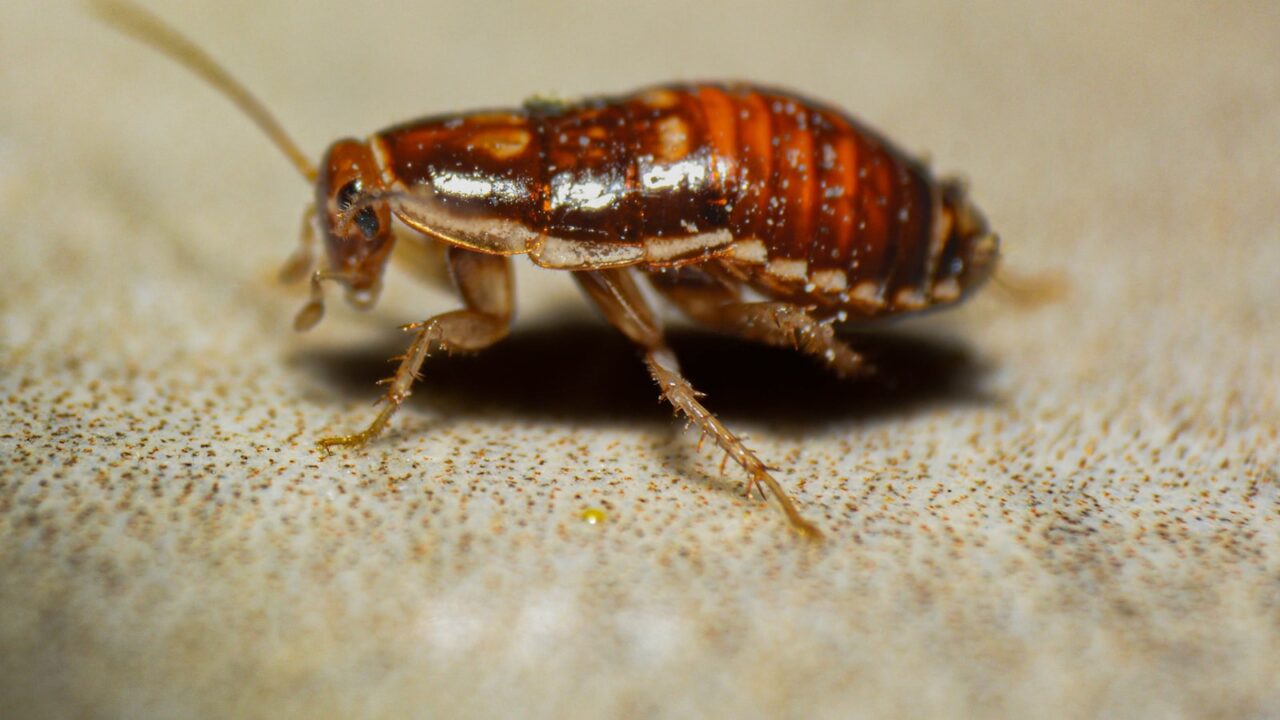
Not all roaches are the same, and the type you have changes how you should treat it. Knowing the common types of cockroaches in Singapore helps you choose the right approach — whether that’s baiting indoors or sealing drains outdoors. Here’s how to tell them apart.
The two types of cockroaches that matter most
In Singapore homes, two species cause the vast majority of problems:
| Feature | German cockroach | American cockroach |
|---|---|---|
| Size | ~1.5 cm | 3–4 cm |
| Colour | Light brown | Reddish-brown |
| Markings | Two dark stripes behind head | Pale figure-8 behind head |
| Where found | Kitchens, bathrooms | Drains, chutes, basements |
| Flies? | Rarely | Can glide short distances |
| Breeds | Very fast, indoors | Slower, often enters from outside |
The German cockroach is the harder of the two types of cockroaches to clear because it breeds rapidly indoors and hides in tiny cracks.
German cockroaches: the indoor breeder
German cockroaches are the small, light-brown roaches you find scuttling in kitchen cabinets, behind fridges and around sinks. They prefer warm, humid spots near food and water — exactly what an HDB kitchen offers.
Because they breed so fast and stay hidden, gel baiting is the most effective treatment. Spraying alone usually scatters them and makes the problem worse.
American cockroaches: the drain dweller
American cockroaches are the large reddish-brown roaches many Singaporeans dread. They typically live in drains, sewers, rubbish chutes and damp common areas, then come up into homes at night.
Because they enter from outside, the key is blocking entry points — covering drains, sealing pipe gaps and screening windows — rather than only baiting indoors.
Other cockroaches you might see
A few less common types of cockroaches turn up in Singapore:
- Brown-banded cockroach: Similar size to the German but with pale bands across the body; tends to spread throughout a room, not just the kitchen.
- Oriental cockroach: Dark, almost black, found in damp drains and basements; less common in flats.
These are less frequent but worth recognising, as treatment follows the same logic — bait indoor breeders, block the entry routes for outdoor dwellers.
Why correct identification changes the treatment
Misidentifying your roaches leads to wasted effort. If you treat a German cockroach problem like an American one (only sealing drains), the indoor population keeps breeding. If you bait endlessly for American roaches without sealing entry points, more keep coming in.
A quick way to remember it: small roaches inside the kitchen usually mean an indoor breeding problem, while large roaches near drains usually mean an entry problem.
Stopping them at the source
Whatever the type, prevention follows the same principles — remove food and water, declutter, and seal entry points. Fitting fine mesh on windows is a simple barrier against the larger species; our window insect screens keep flying and climbing roaches out without blocking airflow. For step-by-step removal, see how to get rid of cockroaches.
If you’re seeing roaches in daylight or numbers keep climbing, it’s worth getting a professional assessment. A cockroach control service in Singapore can confirm the species and target its specific harbourage and entry points.
Where each type tends to turn up in a Singapore home
Knowing the species also tells you *where* to look and act:
- German cockroach — almost always indoors, clustered near warmth and water: the motor housing behind the fridge, the gap under the sink, inside cabinet hinges, around the kettle and microwave. Daytime sightings here usually mean a sizeable hidden population.
- American cockroach — comes up from below: floor drains, the bathroom trap, the rubbish chute and the gaps where pipes enter under the sink. You’ll often see them at night in the kitchen or bathroom, then nothing by day.
- Brown-banded cockroach — spreads higher and wider than the German, hiding behind picture frames, in wardrobes and inside electronics, not just the kitchen.
- Oriental cockroach — sticks to the dampest, coolest spots: drains, basements and service ducts.
This is why a torch check of the right zones beats random spraying — you confirm both the species and its harbourage in one go. For laying the groundwork that keeps every type out, see how to prevent cockroaches.
Why breeding speed makes the German cockroach so persistent
Identification matters partly because of how differently these species reproduce. A female German cockroach carries her egg case until just before it hatches, and each case can release up to around 40 nymphs — and a single female can produce several cases in her life. In Singapore’s constant warmth, generations overlap and numbers can climb quickly if treatment stops too early. That’s why a kitchen that looked clear can have roaches again within weeks: eggs already laid keep hatching. American cockroaches breed far more slowly and mostly enter from outside, which is why blocking drains and entry points controls them more than baiting does. Understanding this difference is the practical reason behind the golden rule — bait persistently for indoor breeders, and seal the routes for outdoor dwellers. For the early warning signs of a building population, see cockroach infestation signs.
Frequently asked questions
Which cockroach is hardest to get rid of?
Do all these cockroaches fly?
Can I have more than one type at once?
Related guides
- How to get rid of cockroaches
- How to prevent cockroaches
- How to get rid of cockroach eggs
- Are cockroaches dangerous?
- Window insect screens
*Not sure what’s invading your home? Get a free cockroach inspection and quote and we’ll identify and treat it properly.*