Pest Control Safety for Babies & Children
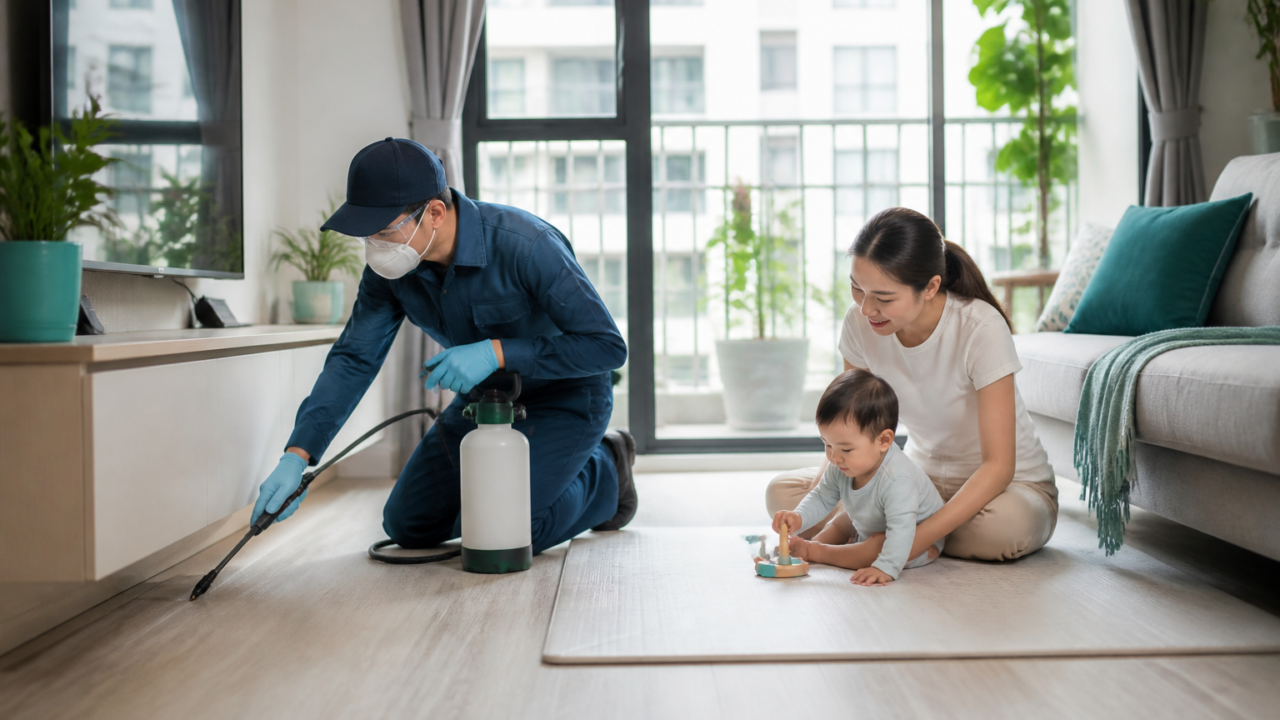
When there’s a baby or young child at home, every parent wants pest control that’s safe for babies as well as effective. Children spend a lot of time on the floor, put things in their mouths, and have developing bodies, so extra care matters. This guide explains how to make pest control safe for babies and children in Singapore homes, from product choices to timing and prevention.
Is Pest Control Safe for Babies?
Done properly, professional pest control can be carried out safely in homes with babies and children. Licensed technicians in Singapore use products at controlled, low-risk concentrations, and most treatments are low-risk once dry and ventilated. The main precautions are about avoiding direct contact with wet treatment, keeping baits out of reach, and ventilating well afterwards.
The goal is to balance two real risks: the pests themselves (cockroaches and mosquitoes carry genuine health concerns) and unnecessary chemical exposure. Sensible planning lets you reduce both.
Precautions Before Treatment
Prepare your home so treatment is as safe as possible for little ones:
- Tell the company a baby or young child lives there — they can choose gentler products and methods.
- Plan to be out of the home during treatment and until surfaces are dry, ideally a few hours.
- Clear and store baby items — bottles, pacifiers, toys, bedding, play mats and high-chair trays.
- Cover or remove items that go in the mouth or against skin.
- Empty the cot area and any low surfaces a crawling child reaches.
A trustworthy provider of pest control in Singapore will discuss child-safe timing and re-entry before starting.
After Treatment: Making the Home Child-Ready Again
- Ventilate thoroughly by opening windows and running fans.
- Wait for all treated surfaces to dry fully before letting children back.
- Wipe down floors and low surfaces where a baby crawls or plays, if advised by the technician.
- Wash any baby items that may have been exposed.
- Keep bait stations well out of reach and check they stay sealed.
Safer, Lower-Chemical Options
For homes with babies, prevention and targeted methods reduce reliance on sprays:
| Method | Why it suits homes with children |
|---|---|
| Gel baits in cracks/crevices | Targeted, placed out of reach |
| Sealed bait stations | Children can’t access contents |
| Integrated pest management | Prioritises prevention over spraying |
| Physical exclusion (screens, sealing) | No chemicals at all |
The lowest-risk approach of all is keeping pests out in the first place. Sealing gaps, managing food and rubbish, and fitting insect screens all cut the need for chemical treatment.
Mosquitoes: A Special Concern for Babies
Babies can’t tell you they’re being bitten, and Singapore’s Aedes mosquitoes spread dengue and Zika, with clusters appearing across the island. Protecting infants from mosquitoes is a priority:
- Use a mosquito net over the cot and stroller.
- Fit window and door screens so you can ventilate without letting mosquitoes in.
- Empty any standing water around the home, in line with NEA’s Mozzie Wipeout.
- Use mosquito repellents only as directed for the child’s age — check the label, and ask your doctor about products for very young infants.
For recurring mosquito problems, our mosquito control in Singapore service can locate breeding sources and treat them. You can also read more in our guide to choosing a mosquito net for baby cots and strollers.
See a Doctor If…
Seek medical advice if a child shows breathing difficulty, persistent coughing, vomiting, rashes, drowsiness or any unusual symptoms after pest treatment or a possible exposure. For very young infants, don’t wait — call your doctor or clinic promptly.
Questions to Ask Your Pest Control Company
A few questions help you judge whether a provider takes child safety seriously:
- What products will you use, and how do they suit a home with a baby?
- How long should we stay out, and when is it safe for a crawling child to return?
- What should we cover, remove or wash beforehand?
- Where will baits or stations be placed, and are they out of reach?
- Do you offer lower-chemical or exclusion-based options?
A company that answers these clearly and adjusts its approach is a good sign. One that brushes off the questions or insists on heavy spraying everywhere is worth reconsidering.
Balancing Pest Risk and Chemical Risk
It’s worth remembering that leaving pests untreated carries its own risks for children. Cockroaches are linked to allergies and asthma, and mosquitoes spread dengue. The aim isn’t to avoid pest control altogether but to do it thoughtfully — targeted treatment, good preparation and an emphasis on prevention so you need fewer chemicals over time.
With good preparation, the right product choices and a focus on prevention, you can keep your home pest-free and safe for your baby.
Age Matters: Crawlers vs Toddlers
The precautions shift a little as a child grows. A newborn or non-mobile baby spends most time in the cot, so the focus is on protecting that sleeping space and on mosquito netting. A crawling baby is in constant contact with floors and low surfaces and mouths everything within reach, so wiping floors after treatment and keeping baits out of reach become the priorities. A toddler can open cupboards and explore, so check that no bait stations are accessible and that nothing has been stored at a reachable height. Matching your prep to your child’s stage is more useful than a one-size-fits-all routine.
Lower-Chemical Habits That Reduce the Need for Treatment
Good housekeeping cuts how often you need any treatment at all, which is the safest outcome of all for a child:
- Store food sealed and clear crumbs promptly to deny ants and cockroaches a food source.
- Take out rubbish in sealed bags and keep bins closed.
- Fix leaks and wipe up standing water, which pests and mosquitoes need.
- Seal gaps around pipes, skirting and under doors.
- Fit insect screens so you can ventilate without letting mosquitoes and flies in.
Frequently Asked Questions
How soon can my baby return after pest control?
Are cockroach gel baits safe with a crawling baby?
Is it safe to use mosquito repellent on a baby?
Should I worry more about the pests or the pesticide?
Related guides
- Are pesticides safe around pets?
- Mosquito net for baby cots and strollers
- Best mosquito repellent for babies
- Cockroach allergy and asthma
- Pest control for childcare and schools
- Window insect screens
*Want pest control planned around your family’s safety? Get a free quote and tell us about your home setup.*