Office Pest Control in Singapore: A Practical Guide
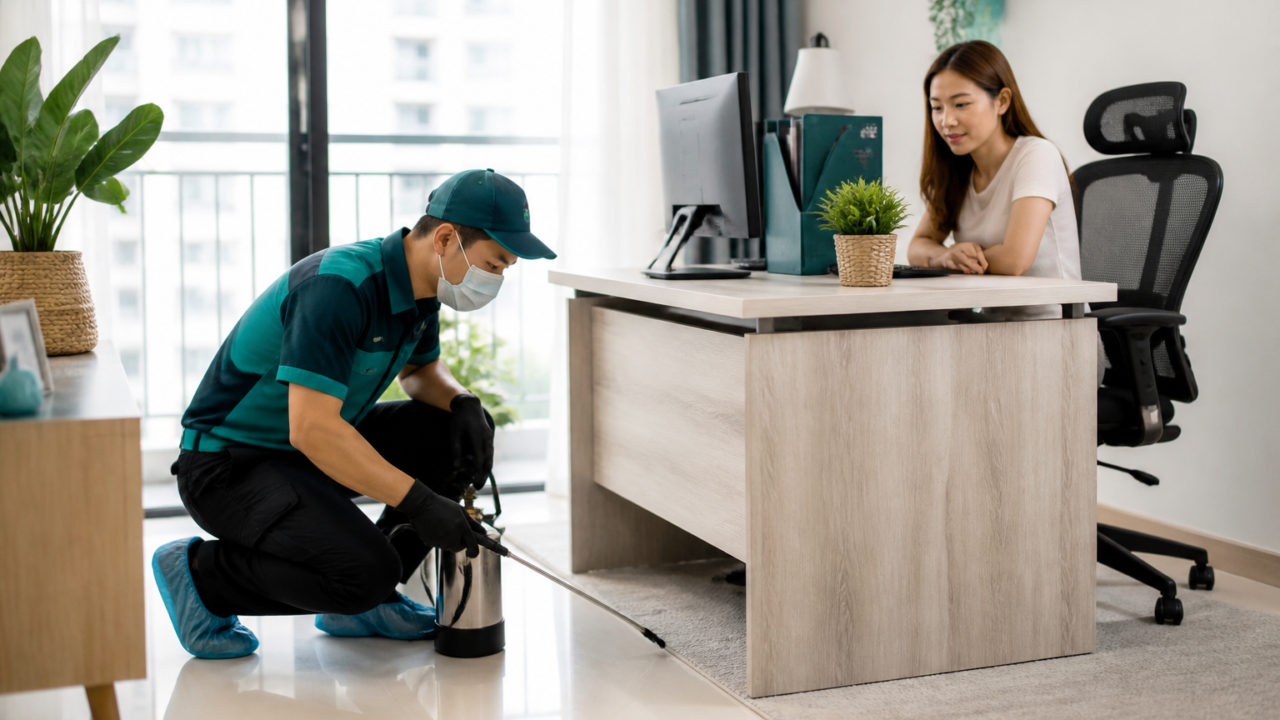
Offices feel like unlikely pest targets, but pantries, server rooms and quiet weekends give pests everything they need. In Singapore’s climate, a small problem in a meeting room or kitchenette can spread fast. This practical guide to office pest control Singapore workplaces need covers the pests you are most likely to see, what staff can do, and how a scheduled service keeps a workplace clear.
Why offices get pests
Modern offices have more pest-friendly features than people realise: pantry food, sugary spills, warm equipment, suspended ceilings and cable risers that connect floors.
The usual culprits in Singapore workplaces are:
- Cockroaches — drawn to pantries, dishwashing areas and drains.
- Ants — trailing to sugar, biscuits and unwashed cups.
- Rodents — using ceiling voids and riser shafts to move between units.
- Flies and gnats — around bins, plants and pantry sinks.
- Booklice and silverfish — in store rooms and paper archives.
Good office pest control in Singapore plans for the whole floor plate, not just the visible corner.
Simple prevention everyone can do
Most office infestations start in the pantry. A few shared habits make a real difference:
- Store food in sealed containers, not open packets in drawers.
- Wash cups and plates rather than leaving them in the sink.
- Wipe pantry counters and clear the fridge of expired food weekly.
- Empty bins daily, especially ones holding food waste.
- Report any sightings — a roach near a desk usually means more nearby.
Facilities teams should also seal gaps around pipes, fit door sweeps, and keep store rooms tidy and dry.
How scheduled office pest control Singapore services work
For most offices, the right approach is a regular, low-disruption service rather than reactive spraying. A professional pest control programme for a workplace usually includes:
| Element | What it does |
|---|---|
| Inspection | Checks pantries, risers, ceilings and store rooms |
| Targeted treatment | Gel baits and monitors instead of broad fogging |
| Monitoring | Discreet rodent and insect stations |
| Reporting | Service notes and recommendations for facilities |
| Scheduling | Often quarterly or monthly, depending on risk |
The aim is to work around staff with minimal smell and downtime — most treatments are done outside working hours or in low-traffic zones.
Dealing with a current problem
If your office already has visible activity, escalate before it spreads across floors:
- Identify where it is concentrated (usually the pantry or a riser).
- Deep clean the area and remove food sources.
- Bring in a professional to treat and locate harbourage.
- Coordinate with building management if pests are coming from shared shafts or neighbouring units.
In shared buildings, treating one office in isolation rarely solves a rodent or cockroach issue that lives in common services.
When to call a professional
DIY bait stations can hold a minor ant problem, but call in help when you see:
- Cockroaches during daytime (a sign of a larger population).
- Droppings, gnaw marks or rodent noise in ceilings.
- Recurring issues despite a clean pantry.
A documented service also reassures staff and reflects well in any workplace hygiene checks.
Pantries, server rooms and other hot spots
Different parts of an office carry different risks, and it helps to know where to look first.
- Pantry and dishwashing area — the single biggest draw, thanks to food, sugar and standing water.
- Server and electrical rooms — warmth attracts cockroaches and the occasional rodent chasing shelter.
- Store rooms and archives — silverfish, booklice and the odd rodent among paper and stationery.
- Ceiling voids and cable risers — highways that let rodents move between floors and units.
- Bin areas and pantry sinks — flies, gnats and roaches around waste and drains.
Concentrating prevention and inspection on these zones catches most problems early, before they spread to the open-plan areas where staff sit.
Shared buildings make this harder
Most Singapore offices sit inside multi-tenant towers or business parks, and that changes the picture. Cockroaches and rodents do not respect tenancy boundaries — they travel through cable risers, false ceilings, common refuse chutes and shared drainage. Treating your unit in isolation can push a population next door, only for it to return.
If your problem clearly originates in common services, raise it with building management so the landlord’s contractor treats the shared areas. The most reliable results come when an in-unit programme and the building-wide one are coordinated, much like the split between condo and MCST pest control in residential developments. Document your sightings in writing so there is a traceable record if the issue recurs.
Cost framing for a workplace programme
Office pest control is usually priced on floor area, the number of hot spots, and how often you want visits rather than a flat figure. A few principles keep it sensible:
- Scheduled beats reactive. A planned quarterly or monthly service costs less over a year than repeated emergency call-outs once a problem is visible to staff.
- Frequency follows risk. A small office with a tidy pantry needs less than a busy floor with a full canteen. Our guide on how often you should do pest control covers what moves the interval.
- Expect a clear quote. A reputable provider scopes the site first and gives a written quote — no surprises. If you are weighing a single visit against ongoing cover, see one-time vs contract pest control.
Frequently asked questions
Can treatment be done without disrupting staff?
We only have ants in the pantry — do we need a professional?
Is fogging necessary?
Who handles pests coming from the building’s risers?
Related guides
- Pest control for restaurants and F&B
- Pest control for condos and MCST
- How to keep cockroaches away
- How to get rid of silverfish
- How to pest-proof your kitchen
- Signs you need professional pest control
Keeping the office clear long term
The offices that stay pest-free pair tidy pantry habits with a regular, documented service and quick reporting. That mix stops small issues from becoming building-wide ones, and it keeps the workplace comfortable and professional for staff and visitors alike.
If you want a discreet, scheduled programme, contact us for a free quote and we will recommend the right plan for your workplace.
*Keep your workplace clear with reliable office pest control in Singapore — request a free quote.*