How to Get Rid of Wasps & Hornets (Singapore)
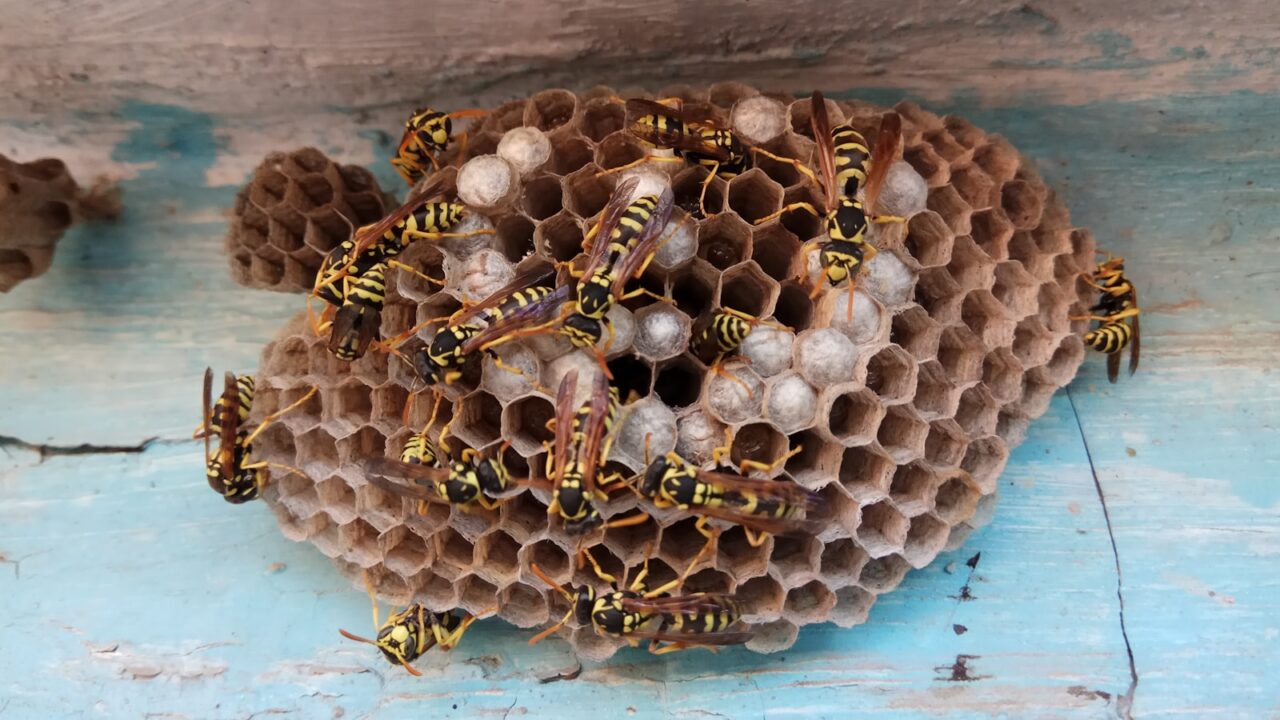
A papery nest under your awning or a hornet patrolling your balcony is more than a nuisance — wasps and hornets sting repeatedly and can be aggressive when their nest is disturbed. If you’re wondering how to get rid of wasps safely around an HDB flat, condo or landed home in Singapore, the most important rule is to avoid provoking the nest. This guide covers what to do, what to avoid, and when the job belongs to a professional.
Wasps and hornets vs bees
Knowing what you’re facing changes how you respond.
- Wasps have smooth, slender bodies with a pinched waist, and build grey, papery nests in sheltered spots.
- Hornets are larger wasps and can be especially defensive; their stings are painful and they may attack in numbers.
- Bees are fuzzy and far less aggressive — if that’s what you have, see our guide on how to deal with bees at home.
Unlike bees, wasps can sting many times, which is exactly why DIY removal is risky.
Why removing a nest yourself is dangerous
Knowing how to get rid of wasps starts with knowing what not to do. Disturbing a nest — by spraying, knocking it, or blocking the entrance — triggers a coordinated defence. In an enclosed corridor or small balcony, that can mean multiple stings in seconds.
Key risks:
- Repeated stings from an agitated colony.
- Allergic reactions, which can be severe.
- Hidden nests in wall cavities, roof spaces or vents that you can’t reach safely.
A partly destroyed nest often makes the remaining wasps more aggressive, so half-measures tend to make things worse. As our guide on DIY vs professional pest control explains, an active stinging-insect nest is one of the clearest cases for stepping back.
What to do right now
While you arrange proper removal:
- Keep your distance and move people and pets indoors.
- Close nearby windows and doors to keep wasps out of living spaces.
- Don’t spray, smoke or poke the nest, especially in daylight when activity is highest.
- Avoid sweet drinks and food outdoors, which attract foragers.
- Warn neighbours if the nest is near a shared corridor or play area.
If you only see one or two wasps occasionally and no nest, they may simply be foraging — keep food covered and they usually move on.
Reducing wasps without touching a nest
You can lower wasp activity around your home with prevention rather than confrontation:
| Action | Why it helps |
|---|---|
| Seal cracks, vents and gaps | Removes sheltered nesting spots |
| Keep bins tightly closed | Cuts off a food source |
| Clear fallen fruit and sweet spills | Reduces what draws foragers |
| Install window insect screens | Keeps wasps out of rooms |
| Check eaves and ledges early | Catches small nests before they grow |
These steps make your home less attractive, but they don’t remove an existing nest.
Where nests appear in Singapore homes
Wasps and hornets favour sheltered, rain-protected spots, and Singapore homes offer plenty. Knowing the usual locations helps you catch a nest while it’s still small — and judge whether it’s safely out of reach.
- Under awnings, eaves and balcony soffits, where the nest stays dry.
- Inside air-con ledges, vents and meter cupboards, often hidden until traffic gives them away.
- Behind signage, pipes and storeroom corners in condo and landed properties.
- In garden trees, hedges and external corners of landed homes.
In an HDB block, a nest in a common corridor, staircase or void deck can be reported to your Town Council; in a condo, raise shared-area nests with your MCST or building management. A nest within your own unit — your balcony, your window recess — is yours to arrange, and that’s where a professional service comes in. Early reporting matters: a nest the size of a golf ball is far easier and safer to remove than one left to grow over the weeks.
When to call a professional
Call for help if:
- The nest is established or larger than a golf ball.
- It’s in a wall cavity, ceiling, vent or other hard-to-reach spot.
- It’s near a corridor, doorway, playground or anywhere people pass.
- Anyone in the household is allergic to stings.
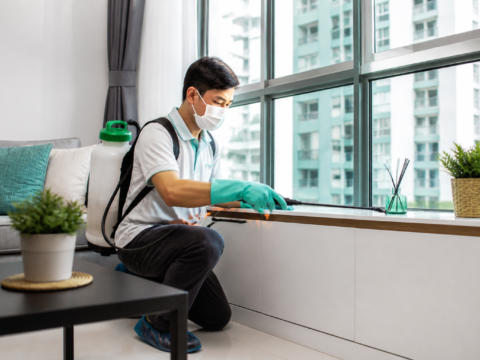
Trained operators have protective suits, the right treatment, and a safe method to remove the nest and prevent rebuilding. Given how quickly hornets in particular can escalate, professional pest control in Singapore is the safe choice for any nest you can’t address from a comfortable distance. Our overview of the signs you need professional pest control can help you decide.
Keeping them from coming back
After the nest is cleared:
- Remove old nest material so the site doesn’t invite a new colony.
- Seal the entry points wasps used to get into cavities.
- Inspect sheltered areas — under ledges, behind signage, in storeroom vents — every couple of months, as Singapore’s climate lets wasps build year-round.
Frequently asked questions
Are wasp stings dangerous?
Why do wasps keep coming back to the same spot?
Can I knock down a nest at night when wasps are calmer?
Do shop-bought wasp sprays work?
Related guides
- How to deal with bees at home in Singapore
- DIY vs professional pest control
- Signs you need professional pest control
- How to keep insects out of the house
- Window insect screens
The bottom line
The honest answer to how to get rid of wasps and hornets is that prevention and avoidance are safe, but removing an active nest usually isn’t a DIY job. Keep your distance, make your home less inviting, and for any established or hard-to-reach nest, bring in a professional with proper protection.
*Wasp or hornet nest you can’t safely reach? Contact Insect Out for a free assessment and safe removal.*