Fly Exterminator in Singapore: How to Get Rid of Flies for Good
A few flies are annoying; a constant swarm around the kitchen or dining area is a sign of a breeding source you haven’t found yet. If you’re searching for a fly exterminator, know that in Singapore we usually call this pest control — “exterminator” is the American term — but the approach professionals take is the same: find where the flies are breeding, remove it, and back that up with traps and treatment. This guide covers what treatment involves, when DIY runs out of road, and what to expect if you run a food business.
Why flies keep coming back
Flies are a symptom, not the root problem. A house fly can complete its life cycle in about a week in Singapore’s warm, humid climate, so a small oversight — a missed bin liner, a clogged floor trap, food debris under an appliance — can turn into a persistent problem fast.
Different flies point to different sources:
- House flies breed in decaying organic matter, rubbish and food waste.
- Fruit flies breed in over-ripe fruit, spills, and the slime inside drains and bottle-return areas.
- Drain flies (moth flies) breed in the organic gunk lining floor traps and seldom-used drains.
- Blow flies (the larger metallic ones) are drawn to meat, bins and, sometimes, a dead animal in a ceiling or void.
Identifying the type tells you where to look — which is exactly what a professional does first.
What a fly exterminator actually does
Effective fly control rests on sanitation first, chemistry second. A reputable provider will:
- Inspect and identify the source. Bins, drains, gully traps, grease under equipment, and hidden organic matter are the usual culprits.
- Advise on sanitation. Removing the breeding medium is what actually stops the cycle; no spray substitutes for it.
- Install or service fly traps. UV light traps (insect light traps) attract and capture adult flies indoors — standard in kitchens and F&B outlets.
- Apply fly baits. Gel or granular baits placed in safe, targeted spots kill foraging adults.
- Treat resting and breeding sites. Residual sprays on non-food-contact surfaces and drain treatments for drain-fly gunk.
- Set a monitoring routine. For businesses, ongoing servicing keeps counts down and provides records.
When DIY stops being enough
Swatting, a shop-bought spray and better bin habits will clear a minor, short-lived fly problem. Call a professional when:
- Flies persist for weeks despite you cleaning thoroughly and emptying bins.
- You can’t locate the source — often a hidden drain, a dead animal, or a shared refuse point.
- You are seeing large numbers or repeated flare-ups in the same spot.
- The problem is in a kitchen serving customers, where flies are a hygiene and compliance risk, not just a nuisance.
For homes, general pest control in Singapore can locate a stubborn breeding source you’ve been unable to trace.
Flies in F&B: a compliance issue, not just a nuisance
For cafés, hawker stalls, restaurants and central kitchens, flies are a food-safety matter. They move between waste and food, and their presence is exactly what inspectors and auditors look for. Food establishments are expected to keep pests under control as part of good hygiene practice, and a visible fly problem can put your grading and reputation at risk.
Professional programmes for F&B typically combine:
- Insect light traps positioned away from food-prep surfaces but along fly flight paths.
- Scheduled drain treatments to kill drain-fly breeding.
- Bin and refuse-area management advice.
- Documented servicing you can show during audits.
If you run a food outlet, our overview of food and beverage pest control in Singapore explains how these programmes are structured.
What treatment day looks like
A typical visit runs like this:
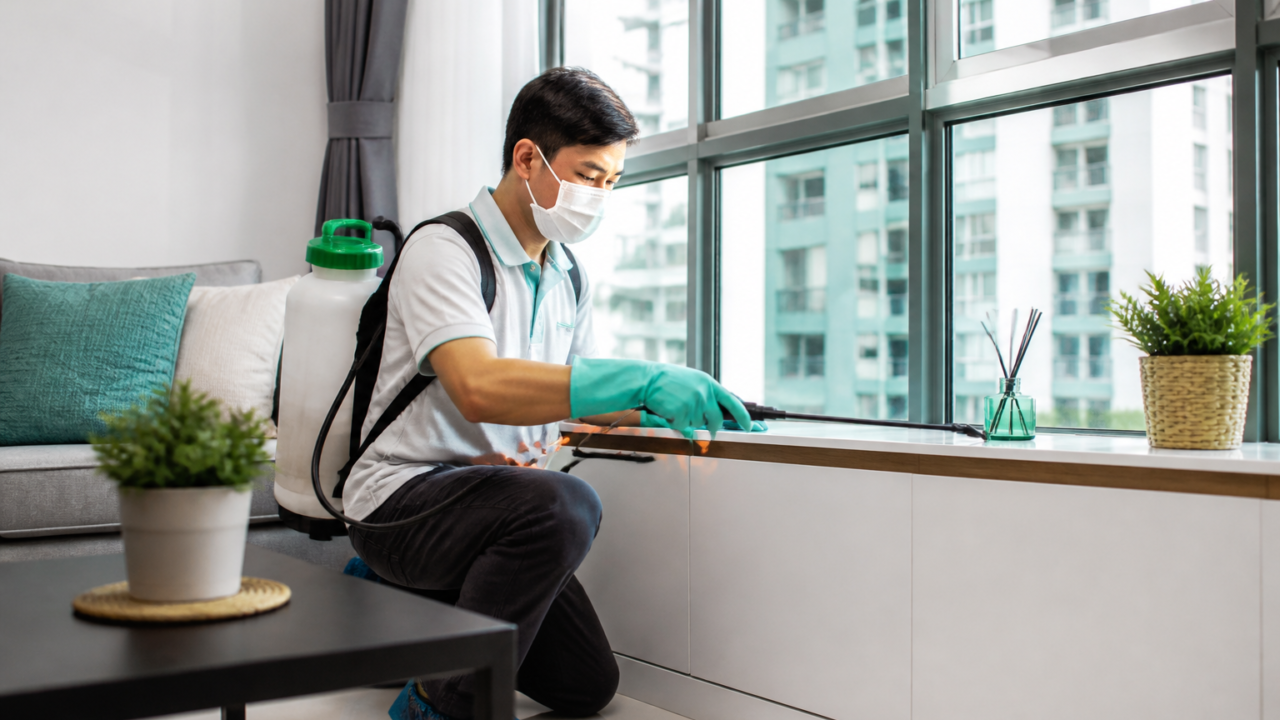
- Inspection. The technician identifies the fly species and traces breeding sites — bins, drains, grease traps, hidden debris.
- Sanitation plan. You’ll get clear actions to remove the breeding medium.
- Trap installation or servicing. Light traps are placed or cleaned; sticky boards may be used for monitoring.
- Baiting and treatment. Targeted baits and drain or surface treatments are applied where safe.
- Follow-up. For persistent or commercial cases, a servicing schedule keeps numbers down and provides records.
You’ll usually be asked to keep food covered and, in kitchens, to schedule treatment around service hours.
What affects the cost
Fly control is priced on the situation rather than a flat rate. The main factors are:
- Premises type and size — a home versus a commercial kitchen.
- Severity and number of breeding sites.
- Whether it’s a one-off or a servicing contract — F&B outlets usually need recurring visits.
- Equipment — supplying and maintaining light traps adds to the cost.
- Access and complexity — grease traps, ceilings and shared refuse areas take more labour.
Because premises vary so much, the sensible route is a quote after an inspection rather than a figure over the phone.
Frequently asked questions
Is “fly exterminator” the right term in Singapore?
Why do I still have flies after spraying?
Do UV light traps really work?
How do I get rid of tiny flies around my drains?
Are fly treatments safe around food?
Related guides
- Pest control in Singapore
- Food and beverage pest control in Singapore
- Mosquito exterminator in Singapore
- Cockroach control in Singapore
- Window insect screens
*Flies you can’t get rid of at home or in your outlet? Get a free quote from Insect Out and we’ll connect you with a licensed provider.*