DIY vs Professional Pest Control: Which Do You Need?
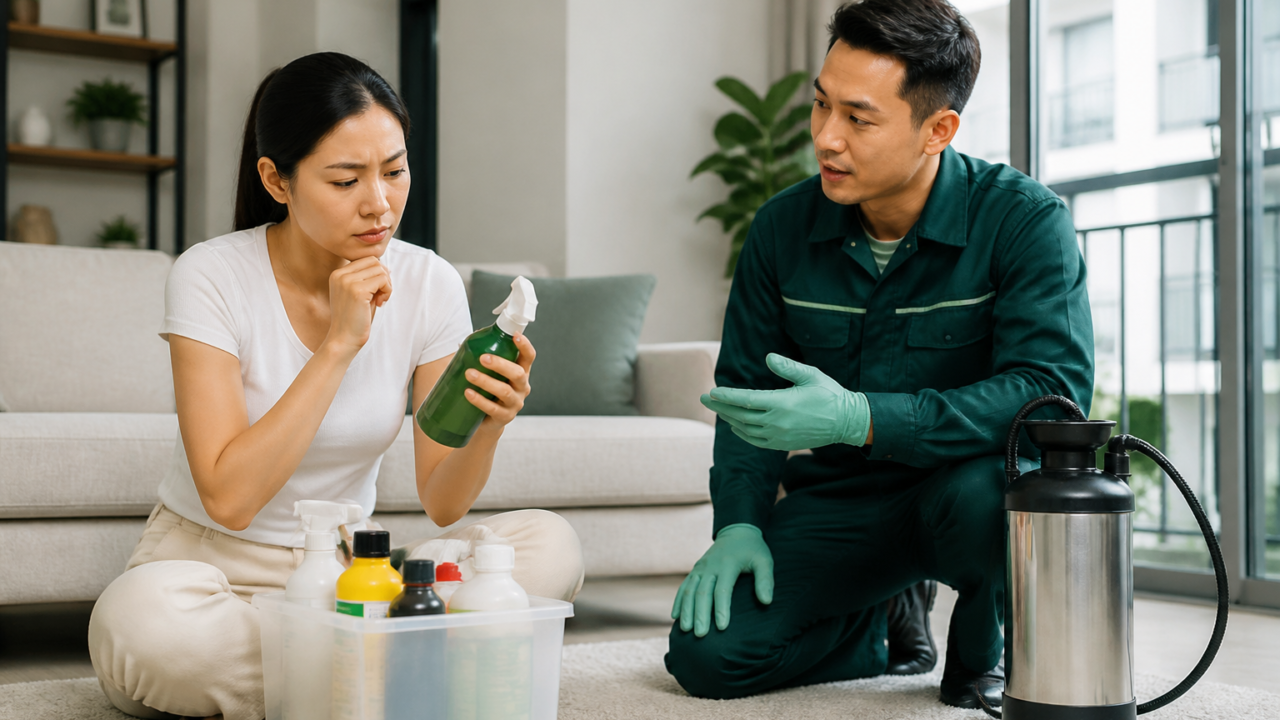
Reach for a supermarket spray, or pick up the phone? It is the question most Singapore households face at the first sign of pests. The honest answer in the DIY vs professional pest control debate is: it depends on the pest, how bad it is, and what you are risking. This guide breaks down where DIY genuinely works, where it falls short, and how to decide.
What DIY pest control can handle
For minor, early-stage problems, DIY is often a reasonable first step — and cheaper. It tends to work for:
- A few ants trailing to a spill — bait gels and good cleaning usually do the job.
- The occasional cockroach wandering in from a drain — sealing gaps plus gel bait can manage it.
- Pantry pests in one packet of rice or flour — discard, clean and store properly.
- Mosquito prevention — removing standing water and using screens or repellents.
- Routine prevention — sealing, cleaning and screening to keep pests out.
The common thread: small numbers, a clear source, and no structural or health risk. For prevention especially, DIY is the smart default.
Where DIY falls short
The trouble with sprays is they kill what you see while the population — often hidden — keeps breeding. DIY usually fails when:
- The infestation is established and breeding out of sight.
- The pest nests in walls, ceilings or underground (termites, rodents, large roach populations).
- You are treating symptoms, not the source.
- The pest poses a structural or health risk.
- The problem keeps coming back after each DIY attempt.
At that point, more spray just adds cost and delay — and can make some pests scatter and spread.
DIY vs professional pest control: a pest-by-pest comparison
Different pests sit at different points on the DIY-to-professional scale.
| Pest | DIY realistic? | When to call a pro |
|---|---|---|
| Ants | Often yes | Persistent or multiple colonies |
| Cockroaches | Minor only | Daytime sightings, recurring activity |
| Termites | No | Any sign — colony lives out of reach |
| Rodents | Limited | Droppings, noise, repeat sightings |
| Mosquitoes | Prevention yes | Cluster pressure, breeding you can’t find |
| Bed bugs | Rarely | Almost always needs professional treatment |
Termites and bed bugs are the clearest “call a professional” cases. Subterranean termite control requires reaching a colony in the soil, and bed bugs are notoriously hard to clear without proper treatment.
Severity and cost: doing the maths
DIY looks cheaper on day one, but the real comparison is total cost to actually solve the problem.
- A few dollars of bait that ends a minor ant trail is great value.
- Repeated sprays that never clear a roach infestation waste money and time.
- Termite damage left untreated can cost far more than a professional treatment would have.
Think in terms of outcome, not just the upfront price. If DIY has failed twice, the cheaper path is usually professional cockroach control or the relevant service — done once, properly.
How to decide
A simple rule of thumb:
- Small, visible, single-source problem? Try DIY first — bait, clean, seal.
- Recurring despite your efforts? Escalate.
- Structural or health risk (termites, rodents, bed bugs)? Call a professional straight away.
- Not sure? A professional inspection costs little and tells you what you are actually dealing with.
When in doubt, getting it assessed early prevents a manageable issue from becoming an expensive one.
Don’t let DIY make things worse
One trap worth flagging: some DIY methods can actually backfire. Broad surface sprays can repel cockroaches, scattering them deeper into walls instead of killing the colony. Over-the-counter foggers rarely reach the cracks where pests hide, and using the wrong product around pets, food or children adds risk without solving anything. If a couple of careful DIY attempts have not worked, the safest and cheapest next step is a professional inspection rather than escalating the chemicals yourself.
Prevention: the one area where DIY always wins
It is worth being clear that the DIY-versus-professional question only really applies to *treating* an active problem. For *prevention*, DIY is not just acceptable — it is the smart default, and it reduces how often you ever need a professional. The highest-value DIY work you can do is the kind that stops pests getting in or finding food:
- Seal entry points — gaps around pipes, under doors and around windows.
- Fit insect mesh screens on windows, doors and vents so mosquitoes and flying pests are blocked while you keep the breeze. Screening is a permanent barrier that no spray can match.
- Remove standing water weekly so mosquitoes have nowhere to breed.
- Store food in sealed containers and clean up spills promptly to cut off ants and cockroaches.
Done consistently, these habits mean a professional is dealing with far less when they do visit. A good frame is that prevention is your job and serious treatment is theirs — see how often you should do pest control for how the two work together.
A quick word on safety and pets
Part of the DIY calculation is risk, not just effectiveness. Over-the-counter products are not automatically gentle — using the wrong one around children, food preparation or pets can do more harm than the pest. If you have cats, dogs or small children, read the label carefully and keep baits and sprays well out of reach, or lean towards a professional who can place treatments safely. Our guide on whether pesticides are safe around pets is a useful starting point before you reach for anything off the shelf.
Frequently asked questions
Is professional pest control always better than DIY?
Which pests should I never try to DIY?
I’ve sprayed twice and they keep coming back — what now?
Will DIY make things worse?
Related guides
- Signs you need professional pest control
- How often should you do pest control
- One-time vs contract pest control
- How to choose a pest control company
- Termite control in Singapore
- Are insect screens worth it
The bottom line
DIY is excellent for prevention and minor, early problems. Professional pest control earns its place when pests are established, hidden, structural or a genuine health concern. Matching the response to the problem — rather than defaulting to one or the other — is what saves you money and frustration.
If you are unsure which side of the line you are on, contact us for a free quote and we will give you an honest assessment.
*Not sure whether it’s a DIY job or one for the pros? Get expert pest control in Singapore advice — request a free quote.*