Diatomaceous Earth for Pests: Does It Work?
Diatomaceous earth is a popular natural pest remedy, and it does work — but not in the way many people expect, and not as a quick fix. In Singapore’s humid climate it also comes with a significant catch. This guide explains what diatomaceous earth is, which pests it helps with, how to use it safely, and where it falls short so you do not waste effort on it.
What is diatomaceous earth?
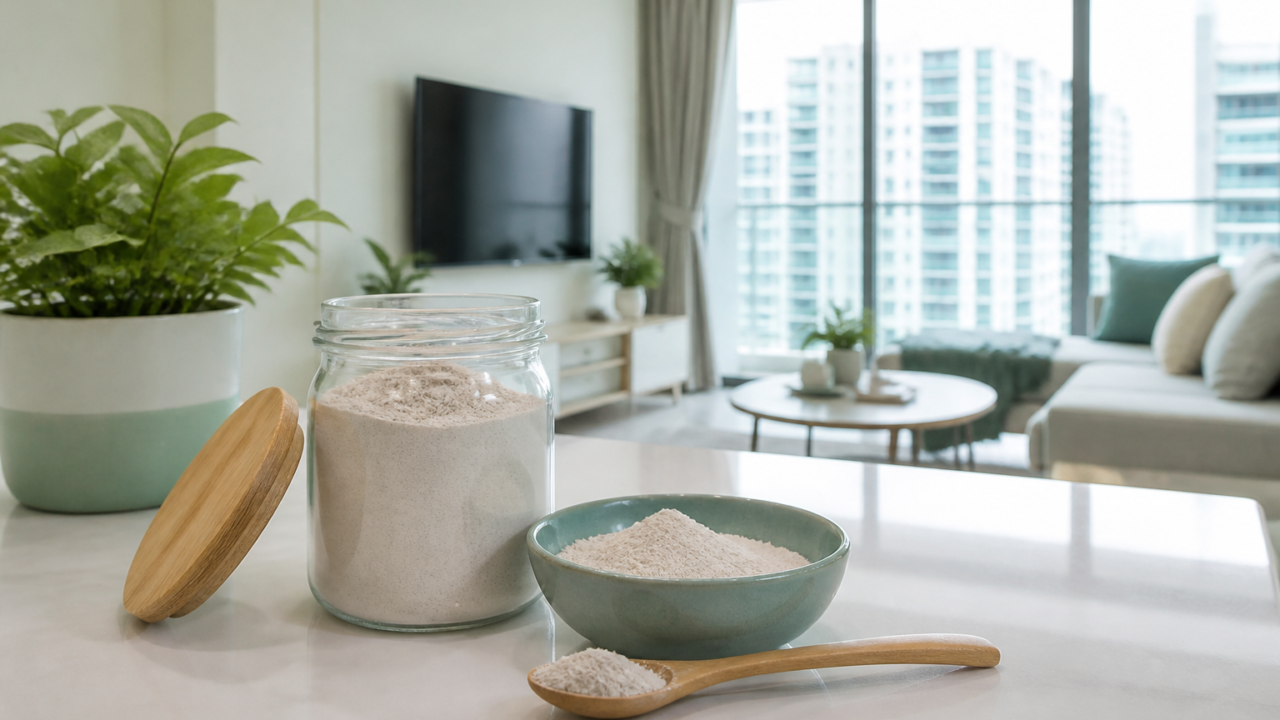
Diatomaceous earth (often shortened to DE) is a fine powder made from the fossilised remains of tiny aquatic organisms called diatoms. Under a microscope the particles have sharp edges.
It kills insects mechanically, not chemically. As a crawling insect walks across the powder, the fine particles scratch through its waxy outer layer and absorb its body moisture, causing it to dry out and die over a period of days.
Use food-grade diatomaceous earth for home pest control, not the type sold for swimming pool filters, which is processed differently and not suitable.
Which pests does diatomaceous earth help with?
DE works only on crawling insects it can physically contact. It can help against:
- Cockroaches
- Ants
- Bed bugs (as part of a wider treatment)
- Silverfish
- Fleas (in carpets and pet-resting areas)
- Carpet beetles
It does not work on flying insects like mosquitoes and houseflies, and it does little once the insect is past the treated zone.
How to use diatomaceous earth safely and effectively
As with boric acid, the technique is a thin, barely visible layer — a thick pile just gets walked around.
- Apply a light dusting along the routes pests travel: skirting, cracks, behind appliances, under furniture and along wall edges.
- For fleas, lightly dust carpets and pet-resting areas, leave for several hours, then vacuum thoroughly.
- Keep it dry — DE stops working when damp.
- Reapply after cleaning or if it gets wet.
Safety around kids and pets
Diatomaceous earth is low in toxicity, but the fine dust is an irritant and should not be inhaled by people or pets.
To use it safely:
- Wear a mask and apply slowly to minimise airborne dust.
- Keep children and pets out of the area during application and until you have wiped up any visible powder.
- Apply into cracks and hidden areas rather than open floors where children crawl or pets walk.
- Choose food-grade DE and store it sealed.
It is generally safer than chemical sprays, but “natural” does not mean “breathe it in freely.”
The big limitation in Singapore: humidity
Here is the honest catch. Diatomaceous earth only works while it is dry. Singapore’s high humidity, plus damp kitchens, bathrooms and drains, means DE often clumps and loses its edge — exactly where many pests live.
This makes it less reliable here than in drier climates. It is best used in dry, undisturbed spots and reapplied regularly, rather than relied on as a standalone solution.
When diatomaceous earth is not enough
Diatomaceous earth is slow and contact-dependent. For an active or growing infestation it is rarely enough on its own:
- Bed bugs need a full, usually professional, treatment — DE alone will not clear them.
- Established cockroach or ant colonies need baiting that reaches the nest.
- Heavy flea infestations need pet treatment plus environmental control.
It works best as one layer in a broader plan, alongside hygiene, baiting and exclusion. For cockroaches, pairing it with boric acid or gel bait reaches further than DE alone; for ants, a homemade ant trap that the colony carries back to the nest does the heavy lifting DE cannot.
So when should you stop relying on DE and call a professional? If pests persist after a couple of weeks of consistent use, or you are dealing with bed bugs or a visible, growing infestation, it is time for help. Our pest control team in Singapore can treat infestations at the source far faster than diatomaceous earth alone, and can advise when DIY is worth trying and when it is not.
How diatomaceous earth compares to other DIY powders
People often weigh DE against boric acid, and they are not the same:
- Diatomaceous earth kills mechanically — it scratches and dries out the insect. It works on contact, is non-chemical, and is the gentler choice around the home, but it is slow and very sensitive to damp.
- Boric acid kills chemically once ingested during grooming. It can be more potent against German cockroaches but should be kept strictly out of reach of children and pets.
Both share the golden rule: a thin, barely-visible layer in dry, hidden places. Both fail in the wet. Many Singapore homes get the best of a DIY approach by using DE in dry, undisturbed spots and reserving baits for active runs and colonies.
Frequently asked questions
Is diatomaceous earth safe around children and pets?
How long does diatomaceous earth take to work?
Why isn’t my diatomaceous earth working in Singapore?
Can diatomaceous earth get rid of bed bugs on its own?
Related guides
- Boric acid for cockroaches
- Homemade ant traps and bait
- Natural insecticides for the home
- How to get rid of fleas in your home
- DIY vs professional pest control
The bottom line
Diatomaceous earth genuinely kills crawling insects, but slowly, only on contact, only while dry — a real handicap in humid Singapore. Use food-grade DE in dry, hidden spots as part of a wider plan, and call a professional for anything established.
*Pests not giving up despite the powder? Get a free assessment from Insect Out and treat the source properly.*