Pet-Resistant Insect Screens: A Singapore Guide
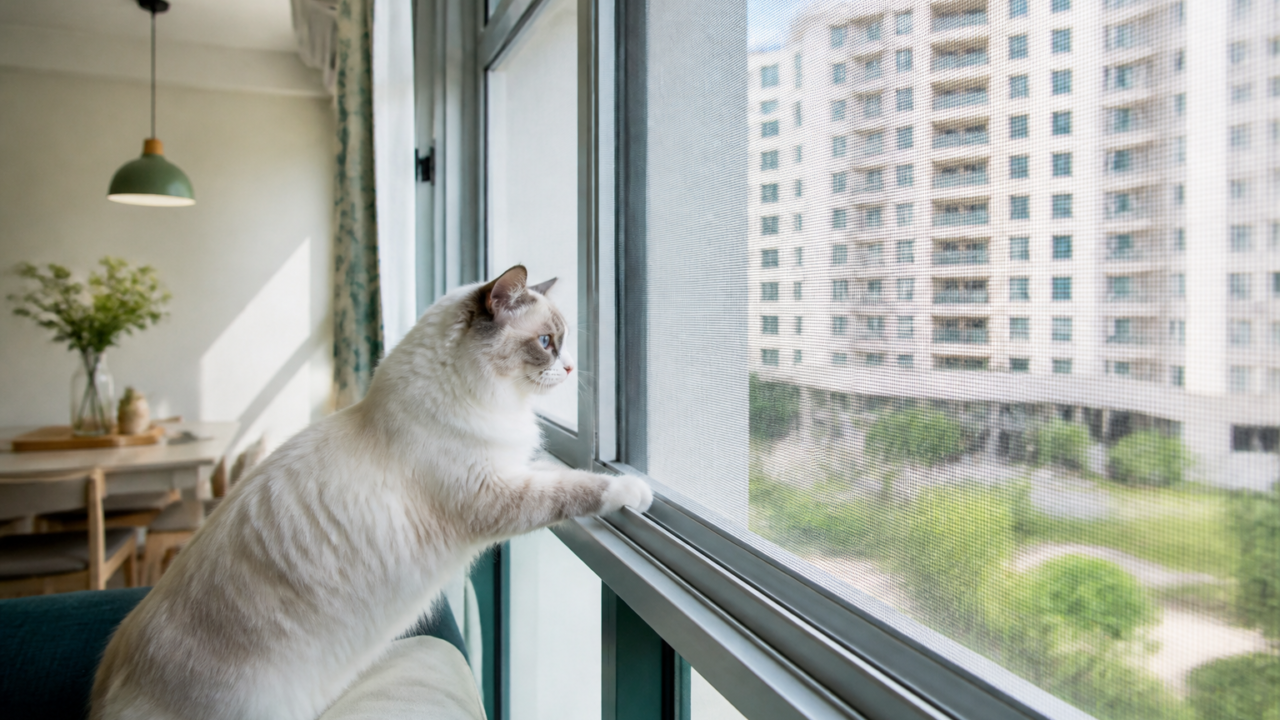
If your cat scratches at the window mesh or your dog pushes against the door screen, a standard insect screen won’t last long. A pet-resistant insect screen uses tougher mesh built to withstand claws and nudging, so you keep insects out without constant repairs. This guide explains how pet-resistant insect screens work, where they help most, and what to look for in a Singapore home.
What Makes a Screen Pet-Resistant?
Ordinary fibreglass or polyester insect mesh is fine for keeping out mosquitoes and flies, but it tears easily under claws or a determined paw. A pet-resistant insect screen is made from a stronger, thicker mesh — often a heavier-gauge, tightly woven material — that resists scratching, biting and pushing.
The result is a screen that still lets air through and keeps insects out, but holds up to daily contact from cats and dogs far better than standard mesh.
Where Pet-Resistant Screens Help Most
Pets interact with screens in predictable spots. Pet-resistant mesh is most useful at:
- Windows where cats perch to watch the outside world
- Sliding doors and balcony doors that dogs lean or scratch against
- Lower sections of any screen within paw reach
- Homes with multiple or large pets where wear is heavier
In HDB flats and condos, windows are also a safety concern — a sturdy screen helps stop a cat from pushing through and getting onto a ledge.
Pet-Resistant Screen vs Standard Insect Mesh
| Feature | Standard insect mesh | Pet-resistant mesh |
|---|---|---|
| Insect protection | Yes | Yes |
| Airflow | Good | Good |
| Claw/scratch resistance | Low | High |
| Pushing/leaning resistance | Low | Higher |
| Best for | Insect-only protection | Homes with cats or dogs |
If your main concern is your cat’s safety at windows rather than just durability, you may want a dedicated solution — see our cat-proof window mesh, engineered to resist a cat’s claws and weight.
Choosing the Right Screen for a Pet Home
When selecting a pet-resistant insect screen, consider:
- Which pet, and how big? Larger or more energetic pets need stronger mesh.
- Where do they interact with windows and doors? Prioritise those openings.
- Window or door type? Casement, sliding and balcony openings each suit different screen styles.
- Drilling allowed? Many HDB and rented homes prefer no-drill, magnetic or frame-fit options.
- Easy to remove and clean? Pet homes need frequent cleaning of fur and dust.
Our window insect screens are designed for Singapore windows and can be specified with sturdier mesh suitable for homes with pets.
Installation and Maintenance Tips
- Choose no-drill where possible — magnetic and frame-fit screens suit HDB and condo windows and won’t damage finishes.
- Trim pet claws regularly to reduce wear on any screen.
- Clean mesh gently to remove fur, dust and dander that block airflow.
- Inspect lower sections periodically, since that’s where paws reach.
- Reinforce high-contact doors if your dog leans there often.
A well-chosen screen keeps the air flowing, the insects out and your pet safely inside — which matters in high-rise Singapore homes.
Is a Pet-Resistant Screen Worth It?
If you’ve already replaced torn mesh once or twice, the answer is usually yes. A pet-resistant insect screen costs a little more upfront but avoids repeated repairs and gives peace of mind around pet safety at open windows. For cats in particular, pairing insect protection with a proper containment mesh is the smartest setup.
To see how no-drill screens fit Singapore homes, browse our insect screens range and check which mesh suits your pets.
Pet Safety at High-Rise Windows
In HDB flats and condos, window safety is a serious consideration for pet owners. Cats in particular are drawn to perch at open windows, and a flimsy standard screen offers little resistance if a cat pushes or leaps against it. A stronger, properly fitted screen acts as both an insect barrier and a containment measure, giving your cat fresh air and a view without the risk of getting onto a ledge.
This dual purpose — insect protection plus pet safety — is why many high-rise pet owners in Singapore choose sturdier mesh from the start rather than upgrading after a scare.
Common Mistakes to Avoid
- Choosing the cheapest mesh for a window your pet uses daily — it will tear and need replacing.
- Ignoring the lower section, where paws and claws do the most damage.
- Leaving gaps at the edges, which let insects in and tempt pets to push through.
- Forgetting maintenance, since trapped fur and dust reduce airflow and stress the mesh.
A little planning up front means a screen that lasts, keeps insects out and keeps your pet safe.
Pet-Resistant Screens for Different Openings
Pets interact with different openings in different ways, so the right screen format varies around the home:
- Casement and sliding windows where a cat perches suit a no-drill window insect screen in a sturdier mesh, or a dedicated cat-proof window mesh where containment is the priority.
- Sliding doors and balcony doors that a dog leans against benefit from a tougher panel — see our sliding door insect screens and balcony insect screens.
- Gates and grille gates that pets brush past can take a fitted mesh — see gate insect screens.
Matching the screen to both the opening type and the pet’s behaviour is what makes it last.
No-Drill Fit for HDB and Rented Homes
Many Singapore pet owners rent, or live in HDB flats and condos where drilling into window frames isn’t ideal. No-drill magnetic and frame-fit screens are a good match: they install without damaging finishes, come off easily for cleaning out trapped fur, and can be taken along if you move. For renters especially, this keeps the deposit safe while still giving pets fresh air and a view. For more on screen options across a home, our HDB insect screens and condo insect screens pages show what suits each setting.
Frequently Asked Questions
Is a pet-resistant insect screen the same as a cat-proof one?
Will a stronger mesh reduce airflow?
Can no-drill screens really hold up to a dog?
How do I make any screen last longer with pets?
Related guides
- Cat-proof window mesh
- Keeping kitty safe
- Window insect screens
- Sliding door insect screens
- Are insect screens worth it?
- Types of window mesh explained
*Cat or dog tough on your window mesh? Explore our cat-proof window mesh and window insect screens built for pet homes.*