How to Get Rid of Millipedes (Singapore)
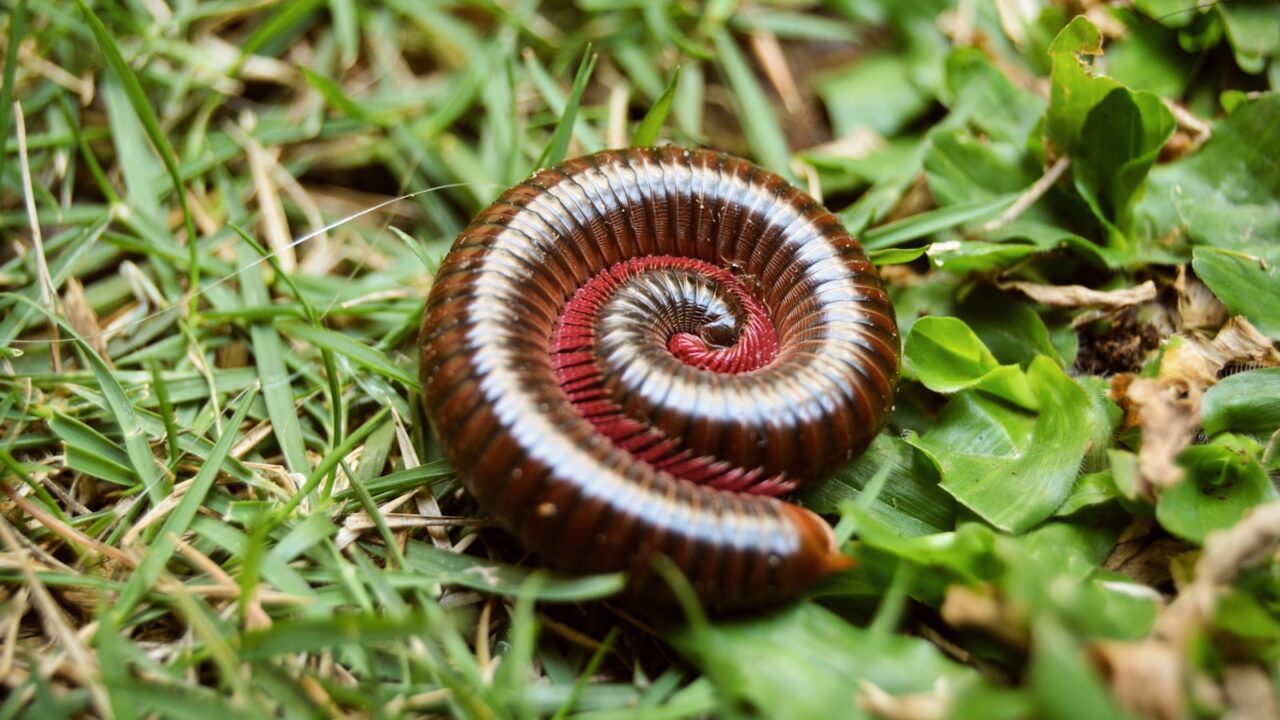
After a heavy downpour, you might find dark, slow-moving, many-legged creatures curling up on your floor, balcony or service yard. Those are millipedes. They don’t bite or damage your home, but they’re unwelcome guests that arrive in waves during Singapore’s wet spells. Here’s how to get rid of millipedes already inside and how to keep the next batch out.
What millipedes are (and why they’re mostly harmless)
Millipedes are slow, cylindrical creatures with two pairs of legs per body segment — unlike centipedes, which are fast, flat and have one pair per segment and can deliver a painful bite. Millipedes are detritivores: they eat decaying leaves, mulch and damp organic matter. They don’t bite or sting, though some release a faint defensive odour and curl into a spiral when disturbed.
If your creature is fast, flat and aggressive-looking, it’s likely a centipede instead — see our guide to getting rid of house centipedes.
Why millipedes come indoors in Singapore
Millipedes need moisture and they migrate when their habitat changes. They turn up indoors when:
- Heavy rain floods their outdoor homes, pushing them to higher, drier ground — including your unit
- The weather turns dry, sending them searching for moisture indoors
- Damp builds up around your home, in pots, drains, mulch or leaf litter
Ground-floor units, homes near greenery, and balconies and service yards with plants are most affected.
How to get rid of millipedes indoors
Millipedes that wander inside usually dry out and die quickly — they can’t thrive in your home. So clean-up plus exclusion does the job; chemicals are rarely needed.
- Sweep or vacuum them up. The simplest fix for the ones already inside. There’s no need to spray them.
- Dry out damp spots. Ventilate, run a fan, and wipe down wet floors and corners. Millipedes can’t survive long without moisture.
- Remove what attracts them outside. Clear leaf litter, old mulch, and decaying plant matter from your balcony, yard or doorstep.
- Empty plant saucers and let overwatered pots dry out.
- Check drains are flowing and not pooling water near entry points.
Keep millipedes out — the lasting fix
Exclusion and moisture control are far more effective than repeated clean-ups:
- Seal entry gaps. Fit or repair door sweeps and weatherstripping, and seal cracks under doors and around pipes — millipedes squeeze through surprisingly small gaps.
- Create a dry barrier. Keep mulch, potted plants and damp debris a little away from doors and walls rather than right against them.
- Fix drainage. Clear gutters, floor drains and any spots where water pools after rain.
- Manage indoor humidity with good airflow, especially in service yards and bathrooms.
- Use insect screens. Fine-mesh screens on windows and sliding doors keep millipedes (and many other rain-driven pests) out while letting air in.
| Action | Effect |
|---|---|
| Door sweeps + sealing gaps | Blocks entry |
| Clearing mulch/leaf litter | Removes habitat |
| Drying out damp areas | Makes home inhospitable |
| Insect screens | Keeps them out, keeps air in |
When to consider professional help
A seasonal trickle of millipedes after rain is normal and easily managed at home. But if you’re getting large, repeated invasions despite sealing and drying out — or you’re not sure whether you’re dealing with millipedes or biting centipedes — it’s worth getting an expert opinion.
Professional pest control in Singapore can identify the species, find the moisture or entry source, and treat the perimeter if needed. For a tidy long-term barrier on your openings, well-fitted sliding door insect screens and window insect screens help keep crawling pests out for good.
Common mistakes when dealing with millipedes
- Spraying insecticide on the ones indoors. Millipedes that wander inside dry out and die on their own, so spraying is unnecessary — just sweep or vacuum them up.
- Cleaning up but leaving the gaps. Without sealing door gaps and pipe entries, the next wet spell brings another wave straight back in.
- Keeping mulch and pots tight against the wall. Damp organic matter right against the building is a launch pad. Pull it back a little.
- Confusing them with centipedes. A fast, flat, aggressive creature is a centipede, which can bite — see what to do about a centipede bite. Slow and cylindrical is a harmless millipede.
The Singapore rainy-season angle
Millipede invasions here are tightly tied to the weather. A heavy monsoon downpour floods their outdoor habitat and pushes them to higher, drier ground — which can mean your ground-floor unit, balcony or service yard — while a sudden dry spell sends them indoors hunting for moisture. Either way, the trigger is a change in dampness. Homes near greenery, parks or landscaped grounds see the most, and the same conditions often bring other rain-driven crawlers like springtails and snails and slugs. The lasting fix isn’t fighting each wave indoors but sealing the perimeter and keeping the strip around your doors dry — see how to keep insects out of the house for the full approach.
Are millipedes dangerous?
Millipedes are not dangerous to people. They don’t bite, and they’re not venomous like centipedes. Their main defence is curling into a tight spiral and, in some species, releasing a mildly smelly fluid — which is harmless but best not rubbed into your eyes, so wash your hands after handling one. They also won’t damage your home’s structure, furniture or stored food. In short, a millipede indoors is a nuisance and a sign of damp, not a hazard. The sensible response is to sweep it out, dry the area, and seal the gap it came through rather than reaching for insecticide.
Frequently asked questions
Why do I suddenly have lots of millipedes after rain?
Do millipedes bite or sting?
How do I tell a millipede from a centipede?
Will millipedes breed inside my home?
Related guides
- How to get rid of house centipedes
- Centipede bite: what to do
- How to get rid of springtails
- How to get rid of snails and slugs
- How to keep insects out of the house
*Millipedes marching in after every storm? Get a free pest-control quote and seal them out.*