Insect Screens for Aircon Ledges & Vents (Singapore)
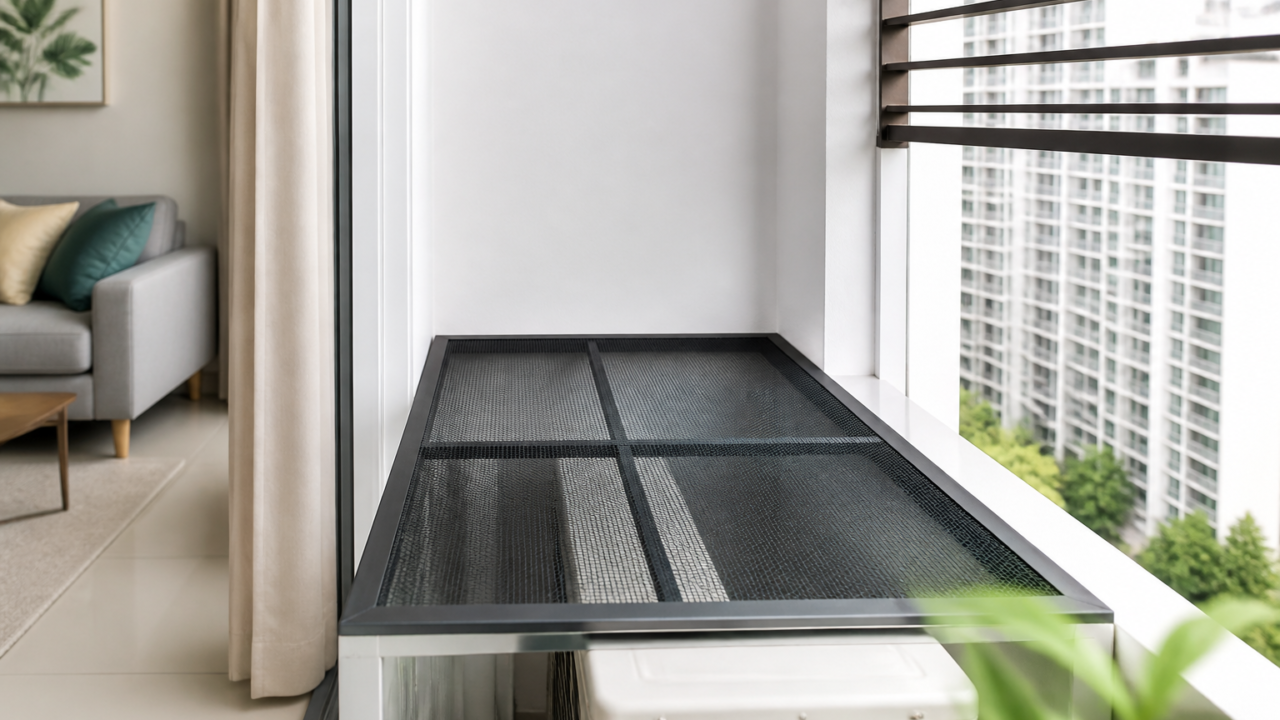
Air-conditioning units are a common but overlooked way for insects to get into Singapore homes. Gaps around aircon ledges, pipe penetrations and vents give mosquitoes, cockroaches, ants and lizards an easy route inside. Fitting the right insect screen for aircon ledges and sealing these gaps closes off that path. This guide explains where the gaps are and how to screen them.
How Insects Get In Through Aircon Areas
Aircon installations create several openings that pests exploit:
- The wall penetration where refrigerant pipes and drainage hose pass through — often left with gaps around the sleeve.
- The condensate drain pipe, which can act as a tunnel for ants and small insects.
- Gaps around the aircon ledge and window where the unit sits.
- Vents and louvres that aren’t screened.
Because these gaps are warm, sheltered and sometimes damp, they’re attractive to cockroaches and ants in particular. Mosquitoes also drift in through any unscreened opening near the unit.
Why an Insect Screen for Aircon Ledges Helps
An insect screen for aircon ledge areas and nearby windows lets you keep airflow and access while blocking pests. Rather than sealing everything solid (which you can’t always do around a working unit), screening covers the larger openings — like the window beside a wall-mounted unit or the ledge area — so insects can’t pass through.
Combined with sealing the small pipe gaps, this gives you a clean barrier without affecting the aircon’s operation.
How to Pest-Proof Your Aircon Area
Work through these steps:
- Inspect the wall penetration. Check around the pipe sleeve for gaps and seal them with a suitable filler or sealant.
- Check the drain pipe outlet. Ensure the condensate pipe drains properly and isn’t a route for ants; some setups use a fine mesh cover at the outlet.
- Screen nearby windows. Many wall-mounted units sit beside a window — fitting an insect screen there closes a major entry point.
- Cover vents and louvres with fine mesh where pests enter.
- Clear standing water. A blocked or pooling condensate drain can breed mosquitoes — keep it draining freely, in line with NEA’s Mozzie Wipeout.
For window openings around your aircon, our window insect screens are designed for Singapore HDB and condo windows and come in no-drill options that won’t damage finishes.
Choosing the Right Mesh
| Pest concern | Mesh need |
|---|---|
| Mosquitoes & small flies | Fine, tightly woven mesh |
| Ants | Very fine mesh plus sealing gaps |
| Cockroaches | Fine mesh plus sealing pipe penetrations |
| Lizards | Standard insect mesh on openings |
Fine mesh handles flying insects; crawling pests like ants and roaches also need the small structural gaps sealed, since they squeeze through openings a screen alone won’t cover.
A Whole-Home Approach
The aircon area is just one entry point. For the best result, treat insect-proofing as a whole-home task: screen windows and doors, seal gaps under doors and around pipes, and keep drains clear. Our insect screens hub shows how the different screen types work together across a home.
If you’ve also noticed pests living inside the aircon unit itself, that’s a related but separate issue — see our guide to pests in your aircon.
When to Get Help
If insects keep getting in despite screening and sealing, or you suspect a cockroach or ant infestation using the aircon route, it’s worth a professional inspection to find and treat the source. Combining exclusion (screens and sealing) with targeted pest control in Singapore gives the most lasting result.
Why This Matters for Mosquito Control
Aircon areas deserve special attention in the context of mosquitoes. A blocked or poorly draining condensate line can hold water, and any standing water is a potential Aedes breeding site — the same mosquitoes behind dengue clusters across Singapore. Checking that your drain runs freely is a small task that supports the wider Mozzie Wipeout effort.
Screening nearby windows also means you can run natural ventilation in cooler periods without inviting mosquitoes in, reducing how often you need the aircon at all.
A Quick Aircon Pest-Proofing Checklist
- Seal the wall penetration around the pipe sleeve.
- Confirm the condensate drain flows freely and holds no water.
- Screen the window beside the unit.
- Cover any unscreened vents or louvres with fine mesh.
- Re-check seals periodically, as they can degrade over time.
Run through this once or twice a year and you’ll close off the aircon route for good.
Sealing and screening your aircon area is a small job that closes one of the most common insect entry points in Singapore homes.
Which Pests Use the Aircon Route
Different pests exploit aircon gaps in different ways, and knowing which one you’re dealing with shapes the fix:
- Ants follow the warmth and condensate line and march through the tiniest gap — screening alone won’t stop them, so seal the pipe penetration too. See how to get rid of ants permanently.
- Cockroaches like the warm, damp void behind a wall-mounted unit and squeeze through pipe gaps. See how to keep cockroaches away.
- Mosquitoes drift in through any unscreened opening near the unit and can breed in a pooling condensate tray. See how to prevent mosquito breeding.
- Lizards slip through larger ledge gaps; standard insect mesh on the opening keeps them out.
HDB and Condo Considerations
In HDB flats, wall-mounted units often sit beside a window in the bedroom or living room, so screening that adjacent window closes the biggest gap in one step. In condos, units may sit on a recessed ledge or service balcony with more pipe penetrations to check. In both cases, no-drill screens are popular because they don’t damage finishes and can be removed for cleaning — useful since aircon ledges collect dust and grime. For options across the home, our HDB insect screens and balcony insect screens pages show what suits each layout.
Frequently Asked Questions
Can insects really come in through the aircon?
Will screening the aircon area affect cooling?
Do I need to seal the pipe gap as well as screen the window?
Can a clogged aircon drain breed mosquitoes?
Related guides
- Pests in your aircon: what to know
- How to keep insects out of the house
- Window insect screens
- How to prevent mosquito breeding
- Are insect screens worth it?
- How to clean insect screens
*Want to close off the aircon route for good? Explore our window insect screens and insect screens range.*